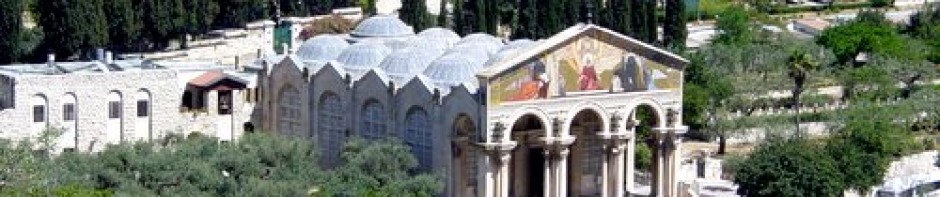
HOSEA: PROPHET WITH A BROKEN HEART
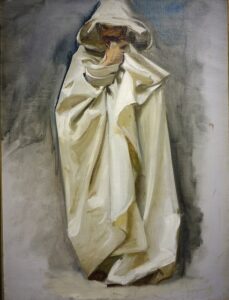
The Prophet Hosea by John Singer Sargent, 1895
Wikimedia Commons, public domain
By
Jim Gerrish
Unless otherwise indicated, Scripture taken from the HOLY BIBLE, NEW INTER-NATIONAL VERSION® NIV® Copyright © 1973, 1978, 1984, 2011 by Biblica, Inc. All rights reserved worldwide. Used with permission.
Copyright © 2026 Jim Gerrish
Light of Israel Bible Publications
Colorado Springs, CO.
HOSEA: PROPHET WITH A BROKEN HEART
INTRODUCTION
From the beginning of her symbolic marriage to God, the Nation of Israel had played the harlot. Even when Moses was up on the mountain receiving the Ten Commandments, the people were down in the valley committing adultery with a false god. We cannot realize how this continued unfaithfulness must have broken the heart of God.
In the Book of Hosea, God paints a picture of his own suffering through the marriage of his prophet. The prophet Hosea was told to go and marry a wife of harlotry or whoredom. Commentators are not entirely sure if his wife was already a harlot or if she was destined to become one. This is not just a picture of Israel but often a picture of the Church. James Montgomery Boice, American theologian and broadcaster, says, “He married us when we were unclean. He knew that we would prove unfaithful again and again.” 1 The Bible says, “But God demonstrates his own love for us, in that while we were still sinners, Christ died for us” (Rom. 5:8 NET).
The history of the northern kingdom, also called Israel or Ephraim, began with adultery. Jeroboam (I) (reigned 931-910 BC), also known as Jeroboam Son of Nebat, became king when Israel broke away from Judah after King Solomon’s death. The prophets always saw this split as wrong and looked to Judah as being the legitimate heir of the covenant.2
One of Jeroboam’s first acts was to erect golden calves at Dan and Bethel. Probably, these were meant to represent the True God and keep the people from rejoining with Judah and its temple, but they quickly became scenes of pagan worship. This king earned for himself the epitaph, “Jeroboam, the son of Nebat who made Israel to sin” (cf. 1 Ki. 22:52; 2 Ki. 3:3; 23:15).
Jeroboam’s sin was also reflected later in Israel’s King Ahab, who reigned from 874 to 853 BC. Ahab married Jezebel, a pagan princess who turned the hearts of Israel away from the True God to worship and serve the false God Baal. We can see how Israel’s leadership was steeped in pagan worship from its beginning.
With the sad experiences of Hosea, we can realize how unfaithfulness, sexual and otherwise, can bring great sorrow and suffering to God and to people in general. Hosea’s name means “salvation,” and it is God who can bring salvation and restoration to the worst of our situations.
CHAPTER 1
The word of the LORD that came to Hosea son of Beeri during the reigns of Uzziah, Jotham, Ahaz and Hezekiah, kings of Judah, and during the reign of Jeroboam son of Jehoash king of Israel: Hosea 1:1
We do not know much about the Prophet Hosea. We know his father’s name was Beeri, which means “my well” in Hebrew.1 We are told that Hosea ministered during the reigns of Uzziah, Jotham, Ahaz, and Hezekiah, kings of Judah, and Jeroboam (II), son of Jehoash, the king of Israel. King Uzziah’s reign was from 783 to 742 BC. There seems to be some variation in the dating of these kings, but in any case, their combined reigns would come close to 100 years. We can say from this that Hosea ministered for a very long period. Faussett feels that the prophet may have ministered for about 60 years.2 Some feel that he was present for the Assyrian conquest of the Northern Kingdom (Samaria or Hebrew Shomron) in 722 BC. He probably was, seeing that he ministered even to King Hezekiah’s reign (715-686 BC).
The name “Hosea” is only mentioned in the Book of Hosea itself and in Romans 9:25. Jesus does make mention of Hosea’s teaching that God desires mercy and not sacrifice (Hos. 6:6) in Matthew 9:13; 12:7. In Matthew 2:15, he relates Hosea 11:1 to Christ. Luke 23:30 refers to Hosea 10:8. Both Paul and Peter make other references to his teaching in 1 Corinthians 15:55, and 1 Peter 2:9-10.3
Bible scholars, Pfeiffer & Harrison say, “Hosea…was the one writing prophet of the northern kingdom to address his own people. Speaking to them with a broken heart, he prophesied their impending exile (Hos. 3:4).” 4 Bob Utley, US Baptist scholar and author, remarks that Hosea has been called “the Jeremiah of Israel,” “the Apostle John of the Old Testament,” and “Israel’s first evangelist.” 5 He was probably a contemporary of the great prophets Isaiah and Mica in Judah.
HOSEA’S FAMILY
When the LORD began to speak through Hosea, the LORD said to him, “Go, marry a promiscuous woman and have children with her, for like an adulterous wife this land is guilty of unfaithfulness to the LORD.” Hosea 1:2
What we see as we begin this verse is an action sermon. Such sermons were given when people had turned a deaf ear to God’s word and when their hearts had become hardened. These sermons were delivered in hopes that people would awaken to reality and truth. We see several action sermons in Scripture. Isaiah once walked the streets stripped as a prisoner of war, and Jeremiah once carried a yoke around on his shoulders. However, there was probably no action sermon that compared with Hosea marrying a harlot to illustrate Israel’s infidelity to God.6 John Phillips, Anglican Bible scholar and translator, says of this: “He could hardly believe his ears. Hosea was a young, God-fearing, idealistic, pure-minded, clean-living man, and the voice told him to marry a whore!” 7
As we mentioned briefly, commentators have had varying ideas about the woman he married. We read in Leviticus 21:7 that a priest could not marry a prostitute. Likely the same requirement would apply to a prophet. Some have wanted to treat the story as an allegory of sorts. Others have seen his bride as one of the many shrine prostitutes. Yet, others have pictured her as a virgin who later fell into prostitution. Charles L. Feinberg, biblical professor, comments, “Just as Luke presents the prodigal son, so Hosea portrays the prodigal wife. Yet, nowhere in the whole range of God’s revelation do we find more beautiful words of love than in Hosea 2:14-16; 6:1-4; 11:1-4, 8, 9; 14:4-8.” 8 We do see at least one more instance of this type of relationship in Scripture. Salmon married the prostitute Rahab and begat Boaz. He, in turn, produced Obed, who produced Jesse, the father of David. (cf. Matt. 1:5).
Widely recognized Bible teacher, David Guzik, comments here: “Through his command to Hosea, God brings to life a consistent picture used throughout the Old Testament. In this picture, the LORD is the husband of Israel, and their passionate, chronic attraction for idols was like the lust of an adulterer. His people were as unfaithful as a prostitute was…” 9
“So he married Gomer daughter of Diblaim, and she conceived and bore him a son” (1:3). The name Gomer has the Hebrew meaning of “ending” or “completing.” 10 She certainly ended the prophet’s chances of a holy marriage. However, the deeper meaning undoubtedly pointed to God, who was about to finish his relationship with Israel. We see this meaning in the next two verses. From all appearances, Hosea loved his wife, and together they had their first child, a son. Scripture seems to make clear that the son really belonged to Hosea.
“Then the LORD said to Hosea, ‘Call him Jezreel, because I will soon punish the house of Jehu for the massacre at Jezreel, and I will put an end to the kingdom of Israel’” (1:4). Jezreel is an important word in the Bible. It speaks geographically of a large fertile valley that runs from the modern Haifa area on the Mediterranean Sea eastward to the Jordan River. Unfortunately, the valley made a natural invasion route, and many battles were fought in it. Deborah and Barak, Gideon, and King Saul all fought in the valley. Saul was defeated and killed by the Philistines, and good King Josiah was killed in the same valley by the Egyptians. King Jehu also destroyed the remnants of Ahab’s kingdom in the valley. This verse focuses on the valley’s last war.
It is interesting that the coming battle of the ages will be fought in this same valley near the city of Meggido. It is referred to in the New Testament as Armageddon (har Meggido or mount of Meggido). The world’s military commanders will surely recognize that Israel can be divided into two parts by conquering the valley. In that great battle, the arriving Christ will defeat the Antichrist and the world’s armies in the Valley of Jezreel. Truly, great will be the day of Jezreel!
Toward the western end of the valley is the ancient city of Jezreel. This city was the capital of Ahab’s kingdom. It was the focus point of all his wickedness. God commanded Jehu to put an end to Ahab’s kingdom. Unfortunately, Jehu conducted an awful bloodbath that went far beyond God’s command.
Jezreel means “to sow” or “to scatter.” Because of Jehu’s sins, he was only promised that his sons would reign on Israel’s throne until the fourth generation (2 Ki. 10:30). His heirs were Jehohaz, Jehoash, and Jeroboam (II). Jeroboam (II), who reigned from 786 to 746, was the most stable and prosperous. His son Zechariah was assassinated after reigning for only six months. After his reign, God began the process of scattering Israel. Several kings were assassinated or had very brief reigns. Of course, the actual scattering would happen with the fall of Israel to Assyria in 722 BC.
British Bible scholar Donald Guthrie asks of Jehu, “Why was his house to be punished? Perhaps he exceeded his duty with misguided zeal (2 Ki. 10:16ff), killed a king of Judah or, more likely, his own heart was not right with God (2 Ki. 10:29, 31).” 11
“In that day I will break Israel’s bow in the Valley of Jezreel” (1:5). The ‘breaking of the bow of Israel’ simply meant that the power of Israel’s army would be broken (cf. Psa. 46:9; Jer. 49:35). Israel had taken great pride in her army and armaments.12 God began to punish Israel around 740 BC with the Assyrian invasion and captivity of the three tribes east of the Jordan River (1 Chron. 5:26). In 722, Samaria, the capital city, fell to Shalmaneser V (2 Kings 17:6). The people were later deported to Assyria. The sad Bible comment explaining this reads:
All this took place because the Israelites had sinned against the LORD their God, who had brought them up out of Egypt from under the power of Pharaoh king of Egypt. They worshiped other gods and followed the practices of the nations the LORD had driven out before them, as well as the practices that the kings of Israel had introduced (2 Ki. 17:7-8).
“Gomer conceived again and gave birth to a daughter. Then the LORD said to Hosea, ‘Call her Lo-Ruhamah (which means “not loved”), for I will no longer show love to Israel, that I should at all forgive them’” (1:6). The Bible does not mention that this child was born to Hosea, as in the case of the first child. Apparently, this daughter was not Hosea’s child.13 Peter Pett, British Bible scholar comments, “For a child in Israel to be given a negative name was a rarity (names were intended to indicate something positive), so that for a daughter to be named ‘unloved’ would have been seen as striking indeed.” 14
The name Lo-Ruhama in Hebrew means “not loved” or “no mercy.” What a terrible name for a new little baby girl. Perhaps she received no mercy and cuddling love from her mother. However, we can be certain that her father tried to fill this gap. Her name, No More Mercy, signified the breach of God’s covenant with the northern kingdom.
“Yet I will show love to Judah; and I will save them – not by bow, sword or battle, or by horses and horsemen, but I, the LORD their God, will save them” (1:7). As we mentioned earlier, the prophets considered Judah as the true recipient of the covenants. Although there was a lot of sin and idolatry in Judah, God would give her 136 more years of mercy. This was vividly illustrated when the Assyrian King Sennacherib tried to conquer Jerusalem. He surrounded the city and boasted of how he would destroy it. However, good King Hezekiah put on sackcloth and sought the Lord. In answer to the king’s boasts, the prophet Isaiah promised that Sennacherib would not conquer the city. When Sennacherib woke up in the morning, he discovered that during the night, the angel of the Lord came into his camp and slew 185,000 of his soldiers. The king quickly retreated to Assyria, where two of his sons struck him down. This incredible and miraculous story is recorded for us in 2 Kings, chapter 19.
“After she had weaned Lo-Ruhamah, Gomer had another son. Then the LORD said, ‘Call him Lo-Ammi (which means “not my people”), for you are not my people, and I am not your God’” (1:8-9). The weaning of children was apparently a slow process in the ancient Middle East. Early American theologian Albert Barnes says, “Eastern women very commonly nursed their children two, or even three (2 Macc. 7:27) years.” 15 It seems very apparent from the name that this newborn son was not a son of Hosea but of someone else. God had promised in Leviticus 26:12 and Exodus 6:7 that he would take Israel for his people. Now, in the naming of Lo-Ammi, God has reversed his great promises.
HOPE IN A TIME OF DESPAIR
Yet the Israelites will be like the sand on the seashore, which cannot be measured or counted. In the place where it was said to them, “You are not my people,” they will be called “children of the living God.” Hosea 1:10
The dark cloud hanging over Israel has a silver lining. Somewhere in the future, God would reverse himself once more and favor Israel. This is a mysterious section of Scripture. Not only would Israel be restored, but her people would be as numerous as the sand of the world’s seashores.
There appear to be two lines of fulfillment in these strange verses. God would not forget the northern kingdom. Utley comments, “In God’s strong rejection of Israel (cf. Hos. 1:1-9; 2:1-13; 3:1-4), he offers acceptance (cf. Hos. 1:10-11; 2:14-23; 3:5). This swing in emphasis is characteristic of the prophet’s presentation of God.” 16 In New Testament times we even see the apostles writing about the scattered northern tribes of Israel (James 1:1; 1 Peter 1:1). Feinberg says: “In verses 1:10 through 2:1 the prophet promises five great blessings to Israel: (1) national increase (1:10a); (2) national conversion (1:10b); (3) national reunion (1:11a); (4) national leadership (1:11b); (5) national restoration (2:1).” 17
The “Lost Tribes” will be found. It appears that we are in a day when this is happening. For several years, I was the Director of an outreach program to new immigrants in Israel. Normally, at our establishment, there were lines of new immigrants awaiting our gifts of food, bedding, kitchen utensils, and other items provided by Christians abroad. Occasionally, we welcomed people from the Caspian Sea and other faraway areas who claimed to be a part of the ten tribes. It is of note today that there are organizations in Israel that focus on bringing these scattered tribes home.
A lot of attention has been turned to a people calling themselves Bnei Menashe, or of the tribe of Manasseh, in northwest India. They had managed to keep their Jewish identity intact for 2,700 years. Recently in the Jerusalem Post it was noted that the State of Israel had authorized the remaining 6,000 members of Beni Menashe to immigrate to Israel by the year 2030. That will be in addition to the 5000 members already living in Israel.18 Interestingly, the International Christian Embassy in Jerusalem has sponsored nearly half of the flights bringing Beni Menashe home since 2012.19
Also, regarding the southlands, God says in Isaiah 43:6, “Do not hold them back.” Ethiopia in the south had been detaining Ethiopian Jews at its airport for a year. On May 24, 1991, in one 33-hour period, some 15,000 Ethiopians were flown to Israel in one giant secret airlift. Today, there are over 150,000 Ethiopian Jews living in Israel. The Ethiopian Jews, known as Beta Israel, feel like they are from the lost tribe of Dan. They, too, had maintained their Jewish heritage for some 2,700 years.
The second line of fulfillment concerns us, Gentile believers in Jesus (Yeshua). The Apostle tells us that by grace and faith in Jesus we become grafted into the old Jewish olive tree (Rom. 11:17). Although we do not replace Israel, somehow we are grafted into that cut that once removed the northern kingdom. Paul writes in Romans 9:25-26, “As he says in Hosea: ‘I will call them ‘my people’ who are not my people; and I will call her ‘my loved one’ who is not my loved one,’ and, ‘In the very place where it was said to them, “You are not my people,” there they will be called ‘children of the living God.’” He clearly uses this verse to explain how we believing Gentiles are now a part of Israel. See also Hosea 2:23 for another picture of this truth.
“The people of Judah and the people of Israel will come together; they will appoint one leader and will come up out of the land, for great will be the day of Jezreel” (1:11). The northern kingdom, known as the lost tribes, will not be rejected forever. Numerous Scriptures speak of its restoration in the end days. These are Deuteronomy 30:1-10; Isaiah 11:13; Isaiah 54:7; Jeremiah 24:6; Jeremiah 31:10-14; Jeremiah 31:28; Jeremiah 32:41; Ezekiel. 34:23; 37:15-28; Amos 9:11, 15; Micah 2:12; 4:6).
CHAPTER 2
Say of your brothers, “My people,” and of your sisters, “My loved one.” Hosea 2:1
The children are now mostly grown. We note that Hosea addresses them with love, compassion, and acceptance. Frederick Brotherton Meyer, beloved English Bible scholar, comments, “Hosea is represented as having exhausted his expostulations upon his faithless wife. He has tried every arrow in love’s quiver, but in vain; so now he sends his children, worse than motherless, to plead with their mother, before she brings upon them all irretrievable retribution.” 1
“Rebuke your mother, rebuke her, for she is not my wife, and I am not her husband. Let her remove the adulterous look from her face and the unfaithfulness from between her breasts” (2:2). Apparently, Hosea is about to lose his patience with Gomer. The words, “she is not my wife, and I am not her husband,” if spoken publicly in the ancient Near East, were the legal formula for divorce.2
We note here how the harlot has a certain adulterous look and manner about her. Those who work in law enforcement commonly see prostitutes arrested and brought into headquarters from America’s city streets. Many of these women flaunt their sexuality, often even toward the police. They have a pitifully depraved and hardened look about them. How far they have removed themselves from God’s plan of the loving wife and tender and loving mother. How far from the reality and truth that God has ordained in marriage.
Our society must take some blame for these many broken lives. Our culture tends to glamorize adultery and loose sex. Boice says of adultery, “It is the chief product of Hollywood.” 3 Adultery and loose sex seem to work well on the silver screen, but these things never work out in real life. They create massive problems by stirring up hatred and jealousy among partners and others. They are the cause of much violence and even murders. Quite simply, illicit sex does not work. It never did, and it never will.
Unfortunately, the pagan princess Jezebel had almost replaced the worship of the True God with Baal worship throughout Israel. There were hundreds of prophets to Baal, while the few prophets of God were in hiding. Much of the attraction to pagan worship was its sexual appeal. Warren Wiersbe, well-known Bible commentator, says, “Pagan worship involved sensual fertility rites, and for these rites, both male and female prostitutes were provided. In a literal as well as a symbolic sense, idolatry meant prostitution.” 4 We can imagine that sexual abuses ran wild at these pagan nature-worshipping sites. Adultery was normalized, although in the true faith of Israel, adultery was punishable by death (Lev. 20:10; Deut. 22:22).
In light of all this, Wiersbe warns us in our sex-crazed society: “We must be careful not to love the world (1 Jn. 2:15-17), be friendly with the world (Jam. 4:4), become spotted by the world (1:27), or conform to the world (Rom. 12:2).” 5 The Apostle Paul says, “I am jealous for you with a godly jealousy. I promised you to one husband, to Christ, so that I might present you as a pure virgin to him” (2 Cor. 11:2).
PUNISHMENT FOR UNGODLY LIVING
Otherwise, I will strip her naked and make her as bare as on the day she was born; I will make her like a desert, turn her into a parched land, and slay her with thirst. Hosea 2:3
Baal was the nature god, the god of storms, rains, and fertility. Asherah was his female partner. Baal worshippers felt that their gods gave them everything they needed in the natural world. These false gods gave them the essentials of life: food, water, oil, wool, and linen. God began to punish Israel by taking all these necessary things away. Their pleasant land became a desert, and they began to be parched with thirst. They soon lacked the necessary clothing (cf. Deut. 28:48). Ezekiel once spoke of this same thing: “They will also strip you of your clothes and take your fine jewelry. So I will put a stop to the lewdness and prostitution you began in Egypt…” (Ezek. 23:26-27). Barnes comments about the real starkness, “The invisible nakedness is, when the soul within is bared of the glory and the grace of God.” 6
We must always remember that God is standing by to supply us with all our needs according to his riches in glory (Phil. 4:19). He can clothe us with the robes of righteousness and quench our burning thirst. Jesus says, “but whoever drinks the water I give them will never thirst. Indeed, the water I give them will become in them a spring of water welling up to eternal life” (Jn. 4:14). He also says, “Whoever believes in me, as Scripture has said, rivers of living water will flow from within them” (Jn. 7:38).
“I will not show my love to her children, because they are the children of adultery. Their mother has been unfaithful and has conceived them in disgrace. She said, ‘I will go after my lovers, who give me my food and my water, my wool and my linen, my olive oil and my drink.’ Therefore, I will block her path with thornbushes; I will wall her in so that she cannot find her way” (2:4-6). Utley says, “The wife symbolizes unfaithful national Israel, while the children symbolize individual Israelites.” 7 How amazing that these Israelites came to believe that Baal and the other false gods could provide all their needs. They could feed the people, clothe them, and give them drink. God was about to give them a real good crop of thornbushes. He was about to take all their blessings away.
Wiersbe comments: “What wickedness it is to take the gifts of God and use them to worship false gods!… One of the first steps toward rebellion against God is a refusal to give God thanks for his mercies (Rom. 1:21). God will not allow us to enjoy his gifts and at the same time ignore the Giver, for this is the essence of idolatry.” 8
Pett brings it all down to modern times when he comments, “Of course, we today would not behave in such a way. Instead, our gods are sports stars, film stars, musicians and singers, or even celebrity chefs. But they nevertheless similarly entice us or encourage us into breaches of God’s commandments. And where that is so, they must be put away, otherwise we too are guilty of spiritual adultery.” 9
“She will chase after her lovers but not catch them; she will look for them but not find them. Then she will say, ‘I will go back to my husband as at first, for then I was better off than now.’ She has not acknowledged that I was the one who gave her the grain, the new wine and oil, who lavished on her the silver and gold – which they used for Baal. Therefore I will take away my grain when it ripens, and my new wine when it is ready. I will take back my wool and my linen, intended to cover her naked body” (2:7-9)
Pfeiffer & Harrison state, “Neither Gomer nor Israel could find satisfaction in infidelity.” 10 It is pretty difficult to find a nonentity anyway. Millions fail at this task in our own day. Meyer comments: “There was no better method of turning Israel from her idols than by withholding that material prosperity which she thought they gave.” 11
God, who freely gives all that the body needs, can take all these things away, as we see in Leviticus 26:14ff. and Deuteronomy 28:15ff. Popular pastor and author Charles (Chuck) Smith says, “‘America, America, God shed his grace on thee.’ …And we begin to attribute the greatness of America to many other things, forgetting that it was God who gave us the corn, the oil, and the wine, the gold, the silver; it was God who made us great.” 12
“So now I will expose her lewdness before the eyes of her lovers; no one will take her out of my hands. I will stop all her celebrations: her yearly festivals, her New Moons, her Sabbath days – all her appointed festivals. I will ruin her vines and her fig trees, which she said were her pay from her lovers; I will make them a thicket, and wild animals will devour them. I will punish her for the days she burned incense to the Baals; she decked herself with rings and jewelry, and went after her lovers, but me she forgot,’ declares the LORD” (2:10-13). I am reminded again of the many prostitutes brought into police stations. In the bright light of the station, the women look lewd, unattractive, and shameful. It is all a part of a tragic deception that the devil has worked.
Apparently, Israel had mixed biblical feasts and festivals with those of Baal and the other pagan gods. Even the holy Sabbath had become defiled with pagan worship. God was about to put an end to all the unholy mixture. The natural world was about to feel his wrath. Israel was famous for its fruit trees as it is today. James Burton Coffman, American minister and theologian, says, “Sensuous women ornamented themselves with jewels and offered themselves to all who desired them, a couple of raisin cakes being the customary price!” 13 There would no longer be grapevines, fig trees and olives. They will become a thicket for wild animals to ruin. Very soon, the Assyrians would destroy everything and lead the people away into captivity.
GOOD TIMES TO COME
Therefore I am now going to allure her; I will lead her into the wilderness and speak tenderly to her. Hosea 2:14
How strange it is that it is often in the wilderness where God blesses his people. We remember how he once fed and cared for them for forty years in the wilderness. Many good things have come out of the wilderness, like the ministry of John the Baptist and even that of Jesus. In the wilderness, God lures his people back to himself. Boice asks, “Have you ever run away from God? Of course, you have. And has he not taken you back? Of course, he has. God’s love is like this, and he has done this to teach you to know his love and come to him.” 14 Once again, God’s judgment is turned into faithful love.
“There I will give her back her vineyards, and will make the Valley of Achor a door of hope. There she will respond as in the days of her youth, as in the day she came up out of Egypt” (2:15). Here we see a pattern that has happened several times in the history of Israel. There is the judgment of God because of the people’s sins, then there is the mercy of God poured out in new blessings. The Valley of Achor in the Hebrew language meant the valley of trouble.15 Yet we see here that the valley of trouble has been turned into a door of hope.
We read in Joshua 7:1-26 the story of Achan, who sinned and took some devoted things from the conquered city of Jericho. A section of Israel’s army went on to conquer Ai, but they were soundly defeated, with some 36 of their soldiers lost in the battle. An inquisition was made by Joshua, and the guilt fell on Achan. With that, Achan, his family, and all that he had were destroyed. Then the wrath of God was allayed, and the armies of Israel continued their conquest of the land.
All this vividly reveals to us the awful cost of sin, even just the sin of one person. Achan caused 36 innocent people to die. Our sins always affect other people, whether small or great. We can also be assured that our sins will find us out (Num. 32:23). Implicit in the Bible is the holistic notion that one man’s sin, however small, affects the entire world, however imperceptibly, and vice versa.16
When sin is confessed, atoned for, and covered, the door of hope is opened. Then the valley of trouble becomes a resting place for herds for the people that seek God (Isa. 65:10). It is interesting that the Israelis once again control this area, which lies to the northwest of Jericho.
In New Testament times, the sin of Achan was repeated. In Acts 5:1-14, we read of Ananias and Sapphira, who took the devoted offering of God and used it for themselves. They both fell dead at Peter’s feet, and great fear fell upon all who heard of it. As a result, the early church made great spiritual advances. We must stop and wonder how many Achans we have in our churches today who are regularly stealing the devoted tithes and offerings by keeping them and using these precious things for themselves.
“‘In that day,’ declares the LORD, ‘you will call me “my husband”; you will no longer call me “my master.” I will remove the names of the Baals from her lips; no longer will their names be invoked” (2:16-17). Baali means “my master, owner, lord” and even “my husband.” 17 Today in Israel, the most common word for husband is still Baal (my master). So, we see that God’s work of removing all traces of Baalism is still going on. Some today refuse to use the term and substitute Ishi, which means “my man.” This is an important thing to God, for he says in Exodus 23:13, “Do not invoke the names of other gods; do not let them be heard on your lips.”
“In that day I will make a covenant for them with the beasts of the field, the birds in the sky and the creatures that move along the ground. Bow and sword and battle I will abolish from the land, so that all may lie down in safety” (2:18). This passage seems to look forward to the Millennial period of one thousand years, when the faithful will rule with Christ on the earth. The land will once again begin to look like the Garden of Eden.
Isaiah speaks in prophecy, “The desert and the parched land will be glad; the wilderness will rejoice and blossom. Like the crocus, it will burst into bloom; it will rejoice greatly and shout for joy. The glory of Lebanon will be given to it, the splendor of Carmel and Sharon; they will see the glory of the LORD, the splendor of our God” (Isa. 35:1-2). He also says, “I will make rivers flow on barren heights, and springs within the valleys. I will turn the desert into pools of water, and the parched ground into springs. I will put in the desert the cedar and the acacia, the myrtle and the olive. I will set junipers in the wasteland, the fir and the cypress together” (Isa. 41:18-19). God will make a way in the wilderness and streams in the wasteland (Isa. 43:19-21; cf. Zech. 14:8).
The Lord will even make a covenant with the beasts of the field, the creatures that move along the ground, and the birds of the air. All his people will be able to lie down in safety (Ezek. 34:25). God says, “The wolf will live with the lamb, the leopard will lie down with the goat, the calf and the lion and the yearling together; and a little child will lead them. The cow will feed with the bear, their young will lie down together, and the lion will eat straw like the ox. The infant will play near the cobra’s den, the young child will put its hand into the viper’s nest. They will neither harm nor destroy on all my holy mountain, for the earth will be filled with the knowledge of the LORD as the waters cover the sea” (Isa. 11:6-9).
During this blessed period, warfare will be abolished. Scripture says, “He makes wars cease to the ends of the earth. He breaks the bow and shatters the spear; he burns the shields with fire” (Psa. 46:9). “He will judge between the nations and will settle disputes for many peoples. They will beat their swords into plowshares and their spears into pruning hooks. Nation will not take up sword against nation, nor will they train for war anymore” (Isa. 2:4). There will at last be peace on earth and goodwill to man (Lk. 2:14).
“I will betroth you to me forever; I will betroth you in righteousness and justice, in love and compassion. I will betroth you in faithfulness, and you will acknowledge the LORD” (2:19-20). Pett says here, “In Israel, betrothal was completely binding and lasted ‘for ever’, and release required divorce. It was the sealing of a covenant.” 18 Utley points out seven characteristics of this betrothal and marriage. It is permanent, righteous, just, loyal, true, compassionate, and faithful.19 Feinberg says, “Finally, the promise is that Lo-ruhama shall be Ruhamah and Lo-ammi shall be Ammi.” 20
“‘In that day I will respond,’ declares the LORD – ‘I will respond to the skies, and they will respond to the earth; and the earth will respond to the grain, the new wine and the olive oil, and they will respond to Jezreel’” (2:21-22). In these verses, we clearly see a principle often forgotten today. Human obedience and sin have a lot to do with the earth and heavens. John’s gospel tells us that the earth and heavens were made by the word of God.
Even our greatest physicists are now coming to a similar conclusion. They are saying that the universe is not just matter but something like “information.” 21 That is very close to John 1:1-3. When the word is broken or spurned, it affects the earth. Likewise, when the word of God is honored, the earth responds to that. Obedience brings natural blessings. Disobedience brings curses. An example of this is seen in the case of bloodshed. In Numbers 35:33, we are told that bloodshed pollutes the land. There is much that we need to learn about this whole subject.
“I will plant her for myself in the land; I will show my love to the one I called ‘Not my loved one.’ I will say to those called ‘Not my people,’ ‘You are my people’; and they will say, ‘You are my God’” (2:23). Finally, the faithful are called “Ammi” (my people). In the New Testament, we read about this promise: “Once you were not a people, but now you are the people of God; once you had not received mercy, but now you have received mercy” (1 Pet. 2:10; cf. Rom. 9:25-26).
Boice enlightens us with something really important here. “To the philosopher of Greece god was unfeeling, indeed, incapable of any feelings whatever. Their word for this was apatheia (apathy). But the Greek god is not the God of the Bible. In the Bible, God weeps for his people, yearns for them, works for their deliverance.” 21
CHAPTER 3
The LORD said to me, “Go, show your love to your wife again, though she is loved by another man and is an adulteress. Love her as the LORD loves the Israelites, though they turn to other gods and love the sacred raisin cakes.” Hosea 3:1
Although it is brief, Chapter 3 is considered to be extremely important. Boice says of it: “The third chapter of Hosea is, in my judgment, the greatest chapter in the Bible, because it portrays the greatest story in the Bible – the death of the Lord Jesus Christ for his people – in the most concise and poignant form to be found anywhere.” 1 Feinberg says, “it rightfully takes its place among the greatest prophetic pronouncements in the whole revelation of God…God makes large disclosures of his plans and dealings, past, present, and future, with Israel, his chosen.” 2
Hosea’s wife Gomer had left her husband and sold herself to adultery. Over the years, her plight had apparently worsened. Phillips feels that she had actually sold herself as a slave to the man with whom she was living. The low price later mentioned indicated that the man did not value her too highly.3 Slavery was a cruel and humiliating thing in the ancient world. The female slave was brought to the market, stripped naked, and bid on by lustful men. The new owner had every right to do as he pleased with the slave, even to kill her if he desired.4
God instructed the prophet to love Gomer as he loves Israel. God’s love was not reciprocated, since Israel loved their sacred raisin cakes. The sacred cakes were used in idolatry, as we note in Jeremiah 7:18 and in Jeremiah 44:19. God loved her despite her rejection of him.
“So I bought her for fifteen shekels of silver and about a homer and a lethek of barley” (3:2). The normal price of a female slave was thirty shekels (cf. Exo. 21:32; Lev. 27:4).5 We can see by this that her price was severely discounted, probably due to her poor condition. In addition to the silver, the price included a homer and a lethek of barley. Barley made the poor man’s bread and was also fed to animals. Commentators have made many attempts to bring this price into our modern understanding. The Bible scholar Bob Utley tells us that a homer means a “donkey load,” or about five bushels. He determines that a homer and a half would have been about 7.5 bushels.6
Slavery was a very common thing in the ancient world. Boice comments: “One could become a slave by conquest…Second, you could become a slave by birth…Finally, you could become a slave through debt. Gomer presumably became a slave in this fashion…the slaves were always sold naked.” 7 How our situation parallels that of Gomer. It was Jesus “who gave himself for us to redeem us from all wickedness and to purify for himself a people that are his very own, eager to do what is good” (Tit. 2:14).
“Then I told her, ‘You are to live with me many days; you must not be a prostitute or be intimate with any man, and I will behave the same way toward you” (3:3). Barnes seems to best sum up the situation between the prophet and Gomer: “Thou shalt abide for me many days – Literally, ‘thou shalt sit,’ solitary and as a widow (Deuteronomy 21:13), quiet and sequestered; not going after others, as heretofore, but waiting for him; (Exodus 24:14; Jeremiah 3:2); and ‘that,’ for an undefined, but long season, until he should come and take her to himself.” 8
We can imagine that this whole situation was quite an embarrassment to God’s holy prophet. Phillips tries to elaborate on the scene by asking some important questions: “What do the children think? Does Gomer finally give her heart unreservedly to Hosea? How does she get along with her gossipy neighbors?” 9 We cannot help but wonder if this situation might correspond to Israel at the present? Israel was sent away because of her idolatry and disobedience. When shall she be redeemed by her forsaken husband? The remainder of the chapter deals with this incredible scenario.
“For the Israelites will live many days without king or prince, without sacrifice or sacred stones, without ephod or household gods” (3:4). This amazing verse accurately describes Israel’s existence for nineteen centuries. Only in the twentieth century did this situation begin to change. Israel, like redeemed Gomer, would be in a trial period to see if she could be true to God. Just as Gomer had no conjugal relations during her time, likewise, Israel would not have intimate wifely relations with her husband. Israel would not have a secular ruler or prince, a temple with its sacrifices, and the priestly ephod with its Urim and Thummim. On the positive side, Israel would not have teraphim or household gods (cf. Gen. 31:19, 34; 1 Sam. 19:13, 16). Israel has certainly tried to stay clear of idols during this time. By the middle of the twentieth century, the nation of Israel was reborn with its government and leaders.
“Afterward the Israelites will return and seek the LORD their God and David their king. They will come trembling to the LORD and to his blessings in the last days” (3:5). Phillips summarizes this chapter, saying, “Hosea was anticipating the coming millennial reign of Christ.” 10 Other commentators like Guzik, Pett, and Utley agree. However, many commentators are antisemitic and deny that Israel will ever be restored. Boice says, “I do not see how so many scholars can deny that there will be a regathering of Israel and a national repentance of Israel in those last days that are yet to come.” 11
How we lost the Millennium makes up a very long story going all the way back to the early centuries of the Christian church. There were two early church leaders who were largely responsible for our loss. The church historian Eusebius (d. 339) and the great and influential Augustine of Hippo (354-430).12 Also, Origen of Alexandria (AD 185-253) was very influential in this matter. Origen is known as the father of the allegorical method of Bible interpretation. He looked at many things in the Bible as allegories. This emphasis originally came from the Greeks. So it became easy to allegorize the Millennium. With the rise of Christian ruler Constantine, many of the early church fathers looked for a Christian kingdom, not one that had anything to do with the Jews.
Today, most Christians do not understand this important period, and neither are they especially interested in it. Some allegorize it in Greek fashion, and some simply deny its existence. We need to understand the Millennium, and in doing so, we will open up a whole world of biblical treasure. We will also find our lives filled with excitement, like that of the earliest Christians.
The Millennium is so vast that we cannot discuss it here. We can just say that in the end, Jesus will get his bride, and she will love him forever. It is a spiritual fulfillment of Hosea’s story.
I have read and studied the Bible for well over 70 years. From my study and meditation, let me at least end this important chapter with a simple outline of events as they may happen. We do not have all the pieces to the puzzle, but we have some of them.
This Present Evil Age (Gal. 1:4) ends with the rule of Antichrist and the Great Tribulation.
The antichrist will gather all nations for a great war against Israel (Joel 3:2; Rev. 20:8-9).
This war will be centralized in Jerusalem and at Megiddo in the Jezreel Valley.
Perhaps in this time Israel will accept her Messiah, and come trembling (Ez. 36:24-34).
Untold numbers of Christians worldwide will be martyred (Rev. 6:9-11; 20:4).
Millions of Jewish people will also be martyred (Zech. 13:8-9).
Jesus appears and is seen worldwide by all people (Rev. 1:7).
The Great Trumpet sounds (1 Cor. 15:52).
God’s living saints are instantly glorified (1 Cor. 15:51-54).
Departed saints are gloriously resurrected into their spiritual bodies (1 Cor. 15:51-52).
Jesus defeats the enemy and assumes rulership over all the world.
The Antichrist and False Prophet are immediately sent to Hell (Rev. 19:20).
Satan is chained and locked up in the Bottomless Pit for a thousand years (Rev. 20:1-3).
The truly wicked people are instantly removed from the earth (Prov. 2:21-22; Matt. 13:49-50).
The Millennium, the Old Earth’s most exciting period, begins.
God’s resurrected saints, old and new, will rule through Christ (Rev.5:10).
The saints will judge the world (1 Cor. 6:2).
Resurrected David will resume rulership of Israel (Jer. 30:9; Ezek. 34:24; 37:25; Am. 9:11).
Resurrected disciples will begin to rule over Israel’s tribes (Matt. 19:28).
The Lord’s faithful saints will rule over cities (Lk. 19:17) and even over nations (Rev. 2:26).
There will be peace, even affecting the animal kingdom (Isa. 11:6-9).
God’s saints are both kings and priests (Rev. 20:6).
Apparently, the saints will help Jesus clean up and straighten up the world.
The earth becomes full of God’s knowledge and glory (Hab. 2:14, Isa. 11:9).
However, many people will continue to live in the flesh (Isa. 65:20-22; cf. Zech. 8:4-5).
There are still traces of evil on earth, so some still need spiritual ministry.
Jerusalem and the Jewish people will gain great prominence (Zech. 8:23).
Finally, all people are governed justly by God’s Law.
The law will go out from Zion to the whole world (Isa. 2:3; Mic. 4:2).
God’s saints will inherit the earth (Matt. 5:5; Psalm 115:16; Dan. 7:18).
His saints are co-heirs with Christ (Rom. 8:17).
The whole creation has been waiting for this (Rom. 8:19).
The earth will become wonderfully blessed and fruitful (Isa. 35:1-2; 41:18-19).
All nations will come to Israel seeking to know the True God (Isa. 2:3 NIV; Mic. 4:2).
It should finally be apparent to heavenly powers that God’s way was best.
This wonderful and blessed period will continue for a thousand years.
Then God will release Satan for a final demonstration of his rule and folly (Rev. 20:3).
Satan will raise a great fleshly army to fight Israel (Ezek. 39:11-16).
He will be quickly defeated and sent to Hell forever (Rev. 20:7-10).
The Age to Come begins (Eph. 1:21), and Christ now rules the whole earth from Jerusalem.
The great judgment of God will happen after a second resurrection.
God will make a renewed heaven and earth (Isa. 65:17; 66:22; 2 Pet. 3:13; Rev. 21:1).
Jesus will finally receive his bride. She will be forever faithful, true, and holy.
The marriage supper of the Lamb will occur (Rev. 19:6-9).
This Age to Come will continue forever without interruption.
We can truly say that “they lived happily ever after!”
CHAPTER 4
Hear the word of the LORD, you Israelites, because the LORD has a charge to bring against you who live in the land: “There is no faithfulness, no love, no acknowledgment of God in the land. Hosea 4:1
Commentators generally agree that this is the setting of a court case with God as the plaintiff and the Israelites as the defendants. The case is essentially a breach of contract.1 God has leased his land to his people, but with the agreement that they would keep his laws and commands. The people failed to keep their end of the bargain. They were no longer even acknowledging God. Boice sums up their disobedience, saying: “God is charging Israel with having: (1) no faithfulness, (2) no devotion, and (3) no knowledge of himself…the key concern and most important ground of accusation is Israel’s failure to acknowledge God.” 2 The same legal setting is seen many times in Scripture as reported by several of the prophets (Isa. 1:23; 41:21; Jer. 2:9; 25:31; 50:34; Mic. 6:2; 7:9).
“There is only cursing, lying and murder, stealing and adultery; they break all bounds, and bloodshed follows bloodshed” (4:2). It is amazing how so many sins people commit result in bloodshed. We do not normally associate stealing and adultery with bloodshed. However, the thief, on many occasions, gets shot or else shoots others. The adulterer also runs a similar risk. So many times, the one committing adultery gets killed by the wronged partner. Also, often there are abortions of the unwanted child who is the product of an adulterous relationship. This is the Hebrew plural used here, meaning bloods touching bloods.
Paul Butler says, “When the divine standard of truth, God’s revealed word, is rejected, moral and political suicide is the result. This is exactly what happened to Israel in Hosea’s time, and to Judah in Jeremiah’s time, complete moral and political anarchy. The same will happen to any nation that rejects God’s Word, the Bible!” 3 In the Interpreter’s Bible, we read: “The ultimate cause of the decline and final collapse of every nation or civilization has been moral and spiritual rather than material.” 4
“Because of this the land dries up, and all who live in it waste away; the beasts of the field, the birds in the sky and the fish in the sea are swept away” (4:3). In the Bible, there is a very close connection between humankind and all of nature. God chose to have human beings rule over nature (Gen. 1:26-28). When that rule becomes depraved, all of nature responds with turmoil and shock. It is probably true that nature feels our tiniest sins.
“You stumble day and night, and the prophets stumble with you. So I will destroy your mother” (4:5). Hosea is here setting the stage for verse 6 and following as he attacks the priesthood. Israel is a nation of stumblers concerning God’s commands. For this, God will destroy their mother. Feinberg sees this as the destruction of the nation of Israel.5 Actually, the TEV version reads, “and I am going to destroy Israel, your mother.”
A POLLUTED PRIESTHOOD
My people are destroyed from lack of knowledge. Because you have rejected knowledge, I also reject you as my priests; because you have ignored the law of your God, I also will ignore your children. Hosea 4:6
Here, Hosea begins his attack on Israel’s priesthood. They had no knowledge because they did not have God’s law. Coffman sums it up, saying: “The wife of Ahab, the notorious Jezebel, had murdered practically all of the true priests and had imported a vast horde of pagan priests from Sidon. As time went on, it must have been a rare thing indeed for any descendant of Levi to have enjoyed the office of the priesthood in Israel.” 6 It appears that some biblical traditions were mixed in with the paganism, but the whole thing was grossly perverted. We can assume that the pagan priests were leaders in much of the debauchery.
The priests were bringing a curse upon themselves. They were leading the people to sin rather than leading them toward righteousness. Guthrey says that the expression “forget your children” was a threat to the whole future of the priesthood.7 And yet, twice in this passage God still refers to Israel as “my people.” What amazing love! God will just not let go of his sinning people.8
“The more priests there were, the more they sinned against me; they exchanged their glorious God for something disgraceful” (4:7). Jeroboam (I) had set the stage by placing golden calves at Dan and Bethel. Wicked Jezebel had used that idolatrous situation to bring in many pagan priests, as we have said. Godliness and godly people really did not have a chance in the northern kingdom. We see this sad verse in 2 Chronicles 11:14: “The Levites even abandoned their pasturelands and property and came to Judah and Jerusalem, because Jeroboam and his sons had rejected them as priests of the LORD” (cf. 1 Kings 12:31; 13:33).
It seems that the priests were the leaders in all the wickedness, adultery and disgrace. Our own day may not be too far removed from this picture. The spirit of adultery has brought down many ministers in our time, some very great and popular ones. What a shame that their sin is now advertised on TV and social media worldwide.
“They feed on the sins of my people and relish their wickedness. And it will be: Like people, like priests. I will punish both of them for their ways and repay them for their deeds” (4:8-9).
The priests were chief offenders in their sinning. They were relishing the sins of the people and looking forward to the nice, tasty offerings they would bring to the shrine. So, the priests were no better than the people. Coffman says, “Even God’s chosen people have at this juncture come to be exact copies of the reprobate pagan priesthood and at last had reached a state of total apostasy from God.” 9
THE MANY SINS OF PRIESTS AND PEOPLE
They will eat but not have enough; they will engage in prostitution but not flourish, because they have deserted the LORD to give themselves to prostitution; old wine and new wine take away their understanding. Hosea 4:10-11
I do not think that many commentators have stopped to imagine what it was like to worship at a pagan shrine. It was like a family trip to a whore house. There was every kind of sex available for everyone. There was prostitution, homosexuality, and all kinds of forbidden kinky sexual activity. The priests were right in the middle of it all. We can begin to understand why pagan worship had such an appeal to the Israelites, especially the men or the leaders of families. We probably don’t want to know everything that went on in the shade of the spreading trees and on the hilltops of Israel.
Of course, it was all a crime against nature and destined to fail miserably with the destruction of the nation. We can imagine the high price people paid for this “worship.” The sexual diseases and unwanted pregnancies ran rampant. In such an environment, there was probably the sexual abuse of young children. Surely, the children would end up with a totally depraved sexual understanding. The emotional price was high as families were ripped apart through adultery. What would a father think if his newborn son strongly resembled one of the priests at the shrine? Anger and bitterness must have run high within the Israelite community. People murder others for such things, and blood touches blood. The whole thing would eventually destroy God’s wonderful plan for the stability of families and society.
Phillips says of it: “In a system where fornication, adultery, and sodomy were not only tolerated but also encouraged, and where male and female prostitutes were available to help consummate worship at every shrine, to go ‘a whoring’ after strange gods was much more than a mere figure of speech.” 10 We must also understand that at these shrines, many evil spirits lurked to capture the minds, hearts, and spirits of the worshippers.
“My people consult a wooden idol, and a diviner’s rod speaks to them. A spirit of prostitution leads them astray; they are unfaithful to their God” (4:12). Pett says, “Illicit sex and drink are thus dulling their minds and preventing them from thinking straightly.” 11 Almost every aspect of pagan religion appealed to the flesh – the illicit sex, intoxicating drink, sumptuous meals from the many sacrifices.
The people of Israel seem to have adopted many pagan forms of worship. They had wooden idols (cf. Jer. 2:27; Hab. 2:19). They also practiced divining with rods. I remember as a small child that one of our relatives, who was supposed to be a preacher, tried to teach us to witch for water. The tree branch in hand was supposed to dip when there was water present underground. At least he had the “witch” part right. The NAS version even calls this stick a “diviner’s wand.”
“They sacrifice on the mountaintops and burn offerings on the hills, under oak, poplar and terebinth, where the shade is pleasant. Therefore your daughters turn to prostitution and your daughters-in-law to adultery” (4:13). What a mess! A lot of the pagan rituals took place on the high hills and under the shade trees. The high hills probably made them feel closer to their god, and the shade trees kept them cool on Israel’s hot summer days. One popular shade tree was the terebinth (cf. Isa. 6:13). The terebinth (pistacia terebinthus) is native to the Mediterranean region and is still known for its shade. Undoubtedly, the thick groves concealed some of the lewd activity.
We can quickly understand why God gave this instruction to the Israelites when they were coming into the land: “This is what you are to do to them: Break down their altars, smash their sacred stones, cut down their Asherah poles and burn their idols in the fire” (Deut. 7:5). Israel did not follow this instruction and these pagan sites became the undoing of both houses of Israel.
“I will not punish your daughters when they turn to prostitution, nor your daughters-in-law when they commit adultery, because the men themselves consort with harlots and sacrifice with shrine prostitutes – a people without understanding will come to ruin!” (4:14). Adam Clarke, early Methodist theologian, comments: “The state of the people at this time must have been abominable beyond all precedent; animal, sensual, bestial, diabolical: women consecrating themselves to serve their idols by public prostitution…men and women acting unnaturally; and all conjoining to act diabolically.” 12 Men are here receiving much of the blame, although it was a male-dominated society.
The people of Israel had not only let go of their morals, but they had let go of common sense and of reality. Had God allowed all this foolishness to go on, the Hebrew people would have vanished from the earth. Pagan worship was anti-God and anti-human.
REMINDING OURSELVES OF GOD’S GREAT PLAN
When we stop and remind ourselves of God’s great plan for humankind, we are almost astounded. God has given us so much and trusted us with so much. He has allowed us to become co-creators with him through holy marriage and childbirth. The husband and wife are to be fruitful and multiply (Gen. 1:28). The Lord has given much true pleasure and satisfaction in this union. God has given the holy family, where there is love and acceptance. God has given newborns the tender love of the mother and the protection of the father. He invented the family unit where the process of birth and family love could function. It is a masterful invention.
The family unit must be kept intact. There can be no divorce. There can be no affairs or any type of unfaithfulness. Husband and wife become “one flesh” as Genesis 2:24 says. They are both required to leave their parents and cling to each other. We can see how adultery, fornication, homosexuality, and other sexual abuses spelled the death of the family and death to the nation of Israel. Indeed, polluted sex will eventually bring about the death of any nation.
I am so thankful that God allowed me to experience this wonder. Although I did not deserve her, God gave me a wonderful, faithful, and loving wife. Together, we brought forth three very special children. There were plenty of struggles in parenting and providing, but somehow the Lord brought us through. After 65 blessed years together, my darling was called to heaven, and my loving daughter, her husband, and large family took me in. They provided me with a roomy section of their home with all amenities. What a blessing to visit with my many grandchildren and great-grandchildren. I constantly marvel at God’s wonderful plan for the family.
What a tragedy that Israel had almost corrupted that wonderful plan. Also, what a tragedy that our Western societies are busy corrupting that plan today with things like homosexuality, lesbianism, feminism, transgenderism, pornography, and other sexual abuses. These things are socially acceptable, but they chop at the foundation of society and civilization. God help us!
WARNINGS FOR JUDAH
Though you, Israel, commit adultery, do not let Judah become guilty. Do not go to Gilgal; do not go up to Beth Aven. And do not swear, “As surely as the LORD lives!” Hosea 4:15
Judah is warned about following the bad example of Israel. It was a shame that the hallowed places of Israel’s history were being turned into pagan shrines. Gilgal was Israel’s first encampment in the Holy Land (Jos. 4:19-24) and should have had many happy memories.13 It was the place where Elijah and Elisha trained prophets (2 Ki. 2:1; 4:38). Bethel was the House of God and a very special place in Israel’s early history. It was a place where God appeared to the fathers and where the Tabernacle once stood. Now, because of the idolatry of Jeroboam (I) and Israel, Bethel is called Beth-aven, or house of vanity or idolatry.14 There seems to be a warning here about trying to mix the worship of the Lord with idolatry.
“The Israelites are stubborn, like a stubborn heifer. How then can the LORD pasture them like lambs in a meadow?” (4:16). Pett comments, “Within the prophet’s heart was always a fear that Judah would go in the same way as Israel, whilst his hope was that if Judah remained solidly behind YHWH it would be a constant encouragement to him in the face of Israel’s coming demise.” 15 Coffman comments, “Instead of behaving as a lamb and following patiently in God’s flock, Israel was like a stubborn heifer that refused to submit to the yoke.” 16
“Ephraim is joined to idols; leave him alone!” (4:17). These words have a terrifying finality about them. The Almighty God is giving up on Israel. Guzik says, “All God must do to make certain a man goes to hell is simply let him alone. Our prayer should always be, ‘LORD, don’t leave me alone. Keep working on me.’” 17
“Even when their drinks are gone, they continue their prostitution; their rulers dearly love shameful ways. A whirlwind will sweep them away, and their sacrifices will bring them shame” (4:18-19). Even when happy hour is over, Israel will continue in her shameful ways. The people will prostitute and adulterate until they hear the whirring winds of chariot wheels and until the fierce Assyrian soldiers stand glaringly with drawn swords over their defiled beds.
CHAPTER 5
Hear this, you priests! Pay attention, you Israelites! Listen, royal house! This judgment is against you: You have been a snare at Mizpah, a net spread out on Tabor. Hosea 5:1
God continues to prosecute his people and to bring many charges against them. Boice asks this question, “How do you deal with one of whom it is written, ‘Nothing in all creation is hidden from God’s sight. Everything is uncovered and laid bare before the eyes of him to whom we must give account (Heb. 4:13)?’” 1
The command “hear” is often used by the prophets. God’s people were hard of hearing and remain with that impediment. Jesus often called out, “Whoever has ears, let them hear” (Matt. 11:15; 13:9; 13:43). Jesus is still making the same call to us as we see in Revelation (2:7, 11, 17, 29; 3:6, 13, 22; 13:9).
Evil snares were set everywhere in Israel. These idol snares were like the nets set by hunters on the mountains of Mizpah and Tabor. Mizpah in Hebrew has the meaning of “outpost” or “watchtower.” There are many towns by this name throughout Israel, so the exact location is impossible to determine.2 Some scholars feel that this site was located in Gilead. Tabor is the prominent and picturesque mountain near the eastern end of the Jezreel Valley. Like the hunters ensnaring birds on these mountains, the priests were attempting to ensnare faithful worshippers into the worship of fertility gods.
The evil priests probably snared the few devout souls who may have wanted to return to the Jerusalem temple. Pfeiffer & Harrison say, “The idolatrous shrines at Bethel and Dan had political implications. They were devised to prevent the people from taking part in the worship at the Jerusalem temple.” 3
“The rebels are knee-deep in slaughter. I will discipline all of them” (5:2). This has been a very troublesome verse for interpreters from ancient times.4 Since the Hebrew word Shittim is used, it may have a reference to Israel’s great, infamous place of sinning (Num. 25:1-3). They have simply made the pit deeper. The RSV translates this: “And they have made deep the pit of Shittim; but I will chastise all of them” (Hos. 5:2).
“I know all about Ephraim; Israel is not hidden from me. Ephraim, you have now turned to prostitution; Israel is corrupt” (5:3). Coffman, citing J. J. Given, says “Note that in this passage, as frequently in Hosea (some 37 times) Ephraim is the name used for Israel… The tribe of Ephraim led the defection of the ten tribes to form the northern kingdom, and it also enthusiastically supported the calf-worship…This powerful tribe, ever envious of Judah, was the ringleader in the calf-worship of Jeroboam, and other idolatries; and through Ephraim’s evil influence, the other tribes, and so all Israel were defiled.” 5 God knows about Ephraim, but Ephraim does not know about God.
“Their deeds do not permit them to return to their God. A spirit of prostitution is in their heart; they do not acknowledge the LORD” (5:4). Utley comments, “The people of Israel had become so settled in their evil character (i.e., ‘spirit of harlotry’) that they had passed the point of no return (cf. Hos. 4:17; Ps. 81:12; Rom. 1:24, 26, 28).” 6 We have come to a point in our Western society that we can hardly judge Israel.
Here we will cite just a few shocking things in the US and on the internet. It is reported:
“By the age of twenty, 81 percent of today’s unmarried males and 67 percent of today’s unmarried females have had sexual intercourse.” 7 “According to sworn testimony before the US Senate, experts reveal that by the time a female in this country is 18 years old, 38 percent have been sexually molested. One in eight women will be raped. Fifty percent of women will be sexually harassed on their jobs during their lifetimes.8
“Many people seem to think having sex with children is a good thing, as one hundred thousand websites now offer illegal child pornography, according to Internet Filter Review. Worldwide, child porn generates three billion dollars in revenues every year.” 9 Even as early as 2005, there were already 4.2 million pornographic websites, and that amounts to 12 percent of all websites in the world.10
Christian philosopher and researcher Nancy Pearcey gives some shocking news about the church and porn. She says, “About two-thirds of Christian men watch pornography at least monthly, the same rate as men who do not claim to be Christian. In one survey, 54 percent of pastors said they viewed porn within the past year.11 For a Christian father to watch porn is to leave the spiritual door open so that all kinds of evil can invade the family. We should say, “I will not look with approval on anything that is vile. I hate what faithless people do; I will have no part in it” (Psa. 101:3). Like Job of old, we must make a covenant with our eyes. (Job 31:1).
A lot of Christians take porn lightly, but they are making a dreadful mistake. They are essentially doing the same thing that Israel was doing. They are mixing gross sexual perversion with their Christian faith. Just like Israel, the judgment of God is on the way for them.
“Israel’s arrogance testifies against them; the Israelites, even Ephraim, stumble in their sin; Judah also stumbles with them” (5:5). It might be said that pride is the basic sin. It was pride and arrogance that brought Satan down. It was also pride that brought Adam and Eve down. Guthrie says, “The whole nation is stumbling, unaware of their imminent fate.” 12 We see clearly here that Judah was also being dragged down with Israel.
“When they go with their flocks and herds to seek the LORD, they will not find him; he has withdrawn himself from them” (5:6). Here, the prophet has reference to the sacrificial system of bringing animals to offer for their sins. This will now be in vain for Israel. She, in her pride and wickedness, has caused God to turn away from her sacrifices.
“They are unfaithful to the LORD; they give birth to illegitimate children. When they celebrate their New Moon feasts, he will devour their fields” (5:7). The expression “illegitimate children” is translated variously in several versions, as alien, strange, and pagan. Nothing good happens by adopting a pagan religion. Again, we in the US need to check our own devotion.
Donald McCullough writes: “We will be tempted, therefore, to create for ourselves gods who will not threaten us with transcendence, gods who will be manifestly useful in a world of confusing voices, and gods who will conform to the contours of our individualistic desires.” 13
A lot of Americans may not serve a pagan god, but they have, in one way or another, made themselves their own god. Sociologist Robert Bellah writes about “Sheila Larson, a young nurse who describes her faith as ‘Sheilaism.’ She says, ‘I believe in God. I’m not a religious fanatic. I can’t remember the last time I went to church. My faith has carried me a long way. It’s Sheilaism. Just my own little voice.’” 14
The Christian philosopher Nancy Pearcey says, “The lesson is that idol-based ideologies are invariably dehumanizing, and if unchecked, they lead to repression, coercion, oppression, war, and violence.” 15
SOUNDING THE TRUMPET
Sound the trumpet in Gibeah, the horn in Ramah. Raise the battle cry in Beth Aven; lead on, Benjamin. Ephraim will be laid waste on the day of reckoning. Among the tribes of Israel I proclaim what is certain. Hosea 5:8-9
Gibeah and Ramah both mean hill or height in Hebrew. Both were in the area of Benjamin, north of Jerusalem. Gibeah was the first capital of King Saul. Ramah was a key administrative center in the north. Ramah was the birthplace, hometown, and burial site of the prophet Samuel (1 Sam. 1:1, 19–20; 25:1). Today it stands out very prominently on a hill in the northwestern outskirts of Jerusalem.
The sounding of horns and the battle cry mentioned probably have reference to the Syro-Ephraimite War (c. 735–732 BC). Briefly, in this war, King Pekah of Ephraim and Rezin, the king of Aram, allied together to attack King Ahaz in Jerusalem. Ahaz sent a large gift, including temple treasures, to Tiglath-Pileser (III), king of Assyria, requesting his help. The Assyrians came and conquered Aram (Damascus), sending its people into captivity. They also did some conquests in Ephraim (2 Kings 15:29 and 1 Chronicles 5:26). Apparently, sometime later, even Ephraim sought help from the Assyrians (Hos. 5:13), which may have halted their total conquest at that time.
Interestingly, the messianic prophecy of Isaiah 7 was given by the prophet at this hour. It was a pledge to Judah that the two kingdoms attacking her would not be successful. They themselves would be broken and defeated. A virgin would conceive and bear a son whose name would be Immanuel. Before the boy would learn to reject the wrong and choose the right, the two threatening kings would be laid waste (Isa. 7:14-16). In Matthew 1:23, the Holy Spirit applied this passage to the birth of Jesus the Messiah.
Since this was the day before technology, all communication was done by trumpets and horns. The trumpet could be made of brass or silver. It was a straight instrument that was used in wars and solemn occasions (Num. 10:1-10; 31:6). The horn was the common curled ram’s horn that was used for many purposes.
“Judah’s leaders are like those who move boundary stones. I will pour out my wrath on them like a flood of water” (5:10). Here, the prophet briefly turns his wrath upon Judah. Pett says, “So Israel and Judah are both in trouble, the difference being that Israel has gone too far, while for Judah, there is still hope.” 16 The pronouncement is against those who move landmarks or boundary stones. Coffman says, “In their ancient culture, the lowest class of crime was that of tampering with landmarks.” 17 Why was this such an offense? God had given to each tribe a holy plot of territory. It was a grant from God and could not be changed (Deut. 9:14; 27:17; Job 24:2; Prov. 22:28; 23:10). A similar thing was true with each family plot. It was to remain intact through all their generations. It was probably a big temptation for a farmer to nudge the boundary stone just a little in his favor, but it was a crime against God. In Leviticus 25, we read about the Day of Atonement in the fiftieth year or the Year of Jubilee. At that time, people could return to their original property and to their original tribe.
Guthrie submits an idea that this also might be speaking of Judah’s King Asa, who annexed some Israelite territory (1 Ki. 15:20-22).18 It is clear that private and public holdings must continue intact (Lev. 25:8-10).
“Ephraim is oppressed, trampled in judgment, intent on pursuing idols. I am like a moth to Ephraim, like rot to the people of Judah” (5:11-12). Simply, Ephraim was oppressed and beaten up because of its idolatry. The work of idolatry was much like the work of a moth on garments or rot on a building. It works slowly, little by little, and in complete silence until the garment, building, or nation is destroyed.
On one of our trips to Israel, my wife and I purchased a beautiful woolen wall hanging. We brought it back to the US and proudly hung it on one of our walls. However, we began to notice that we had to sweep under it quite often. Then it became apparent that the hanging was infested with small larvae, and they were having a banquet on our hanging. The moths had done their work, but the destruction was not noticed until it was too late. We sadly put our once beautiful wall hanging into the trash.
CRYING OUT FOR HELP
When Ephraim saw his sickness, and Judah his sores, then Ephraim turned to Assyria, and sent to the great king for help. But he is not able to cure you, not able to heal your sores. Hosea 5:13
This is the first mention of dreaded Assyria by name in the book of Hosea. The king of Assyria is referred to in Hebrew as Yareb. The Texas Bible scholar Bob Utley sheds some light on this strange word. “‘King Jareb.’ This seems to refer to a nickname for Tiglath- pileser (III), who was king of Assyria. The term means ‘king pick a quarrel’ …A brief listing of Assyrian kings of this period would be: Tiglath-pileser (III), 745-727 B.C.; Shalmaneser (V), 727-722 B.C.; Sargon (II), 722-704 B.C.; and Sennacherib, 704- 681 B.C.” 19
We might mention that Tiglath-pileser had already carried away Israel’s tribes of Reuben, Gad, Naphtali, and the half tribe of Manasseh in 732 BC. These tribes lived on the east side of the Jordan River. Wiersbe sadly remarks, “Israel and Judah were weak, sick nations (Isa. 5-6; Jer. 30:12-13), but instead of turning to the Lord for healing, both of them turned to the king of Assyria for help (Hos. 5:13).” 20 Of course, Israel was playing right into the hands of the Assyrians. Later in 722, the nation fell to Assyria, and its people were carried away into captivity. Since that time, they have been referred to as “the Ten Lost Tribes.” Only in recent years have some in these tribes begun to return to Israel, as we have mentioned.
“For I will be like a lion to Ephraim, like a great lion to Judah. I will tear them to pieces and go away; I will carry them off, with no one to rescue them. Then I will return to my lair until they have borne their guilt and seek my face – in their misery they will earnestly seek me.” (5:14-15). This is the picture of a great lion or king of the beasts after he has made a kill. There is no concern that anyone can take it from him. He walks leisurely back to his lair with the helpless kill in his mouth. God will wait through the years until Israel earnestly seeks him. In the case of Israel or Ephraim, no one could have guessed that it would take over two thousand years before they would earnestly seek him.
CHAPTER 6
Come, let us return to the LORD. He has torn us to pieces but he will heal us; he has injured us but he will bind up our wounds. Hosea 6:1
THE SHALLOWNESS OF ISRAEL’S REPENTANCE
Wiersbe comments: “When you read these words, you get the impression that the nation is sincerely repenting and seeking the Lord, but when you read what God says, you see how shallow their confession really was: They do not return to the Lord their God, nor seek him (7:10)… They were like physicians putting suntan lotion on a cancerous tumor instead of calling for drastic surgery. Expecting a ‘Quick fix’ is one of the marks of an unrepentant heart that doesn’t want to pay the price for deep cleansing (Ps. 51:6-7).” 1
When we examine the words of this exhortation, we realize that some important elements are missing. We do not see anything about the confession of their sin, and neither do we hear any cry of repentance for that sin.2
Truly, we are walking on dangerous ground if we come before the Almighty God with a fickle heart. Ecclesiastes 5:1-2 says: “Guard your steps when you go to the house of God. Go near to listen rather than to offer the sacrifice of fools, who do not know that they do wrong. Do not be quick with your mouth, do not be hasty in your heart to utter anything before God. God is in heaven and you are on earth, so let your words be few.” Indeed, we had better not come before God with words, words, words, but with deeds.
“After two days he will revive us; on the third day he will restore us, that we may live in his presence” (6:2). Several commentators see this verse as an oblique reference to the Resurrection. While the verse does not specifically apply to the Resurrection, there may be a spiritual connection. We need to remember that the Holy Spirit is the author of Scripture. He can take a verse from anywhere in the Holy Book and apply it to Jesus if he wishes. The Holy Spirit is the author of God’s holy word. “All Scripture is God-breathed and is useful for teaching, rebuking, correcting and training in righteousness, so that the servant of God may be thoroughly equipped for every good work” (2 Tim. 3:16-17). In its normal sense, this verse (6:2) applies to the restoration of Israel.
“Let us acknowledge the LORD; let us press on to acknowledge him. As surely as the sun rises, he will appear; he will come to us like the winter rains, like the spring rains that water the earth” (6:3). The simple truth is that the people have not acknowledged God. The prophet has made this plain several times, in 4:1, 6, and 5:4. We do not see them confessing this lack of knowledge and acknowledgement and asking forgiveness for it.
Some scholars feel that by the mention of the rains, the people are placing the nature gods on a parity with the True God. 3 Quite simply, their whole approach in their return to God was just not sincere.
DOES GOD EVER GET FRUSTRATED?
What can I do with you, Ephraim? What can I do with you, Judah? Your love is like the morning mist, like the early dew that disappears. Hosea 6:4
“O Ephraim, what shall I do unto thee? — This is the answer of the Lord to the above pious resolutions; sincere while they lasted, but frequently forgotten, because the people were fickle.” 4 We note that Judah is included in this divine complaint. Both nations are like the dew on a summer morning. When the sun comes up, and its warm rays fall on the plants, the dew quickly disappears. God’s nations could not take the heat or the temptations and lusts of pagan religions.
The American President, Harry S. Truman used to say, “If you can’t stand heat, get out of the kitchen.” In Israel’s case, particularly, they needed to get away from the temptation of idolatry. That was difficult to do since paganism had thoroughly infiltrated their society.
Later in 13:3, the prophet will also say, “Therefore they will be like the morning mist, like the early dew that disappears, like chaff swirling from a threshing floor, like smoke escaping through a window.” God sees their shallow and defective repentance. He also sees their love for him, and he knows that it would soon evaporate.5
“Therefore I cut you in pieces with my prophets, I killed you with the words of my mouth – then my judgments go forth like the sun” (6:5). God’s word cuts like a very sharp razor. The Book of Hebrews says, “For the word of God is alive and active. Sharper than any double-edged sword, it penetrates even to dividing soul and spirit, joints and marrow; it judges the thoughts and attitudes of the heart” (Heb. 4:12). We note with this verse that the word even cuts into our thoughts and attitudes.
“For I desire mercy, not sacrifice, and acknowledgment of God rather than burnt offerings” (6:6). Feinberg comments: “Some men have inferred from such a passage as this, together with Isaiah 1:11-20; Micah 6:6-8; Jeremiah 7:21-26; and others, that God never desired the sacrificial system in Israel. This is surely a shortsighted view, for God himself instituted the Levitical system in Israel, as is clear from the books of Moses.” 6 Guthrie says, “God looks for real devotion in preference to the most excellent and extravagant tokens of it.” 7 We see this summed up in 1 Samuel. “…Does the LORD delight in burnt offerings and sacrifices as much as in obeying the LORD? To obey is better than sacrifice, and to heed is better than the fat of rams” (1 Sam. 15:22). Guzik notes that Jesus twice quoted this passage to the religious leaders of his day (Matthew 9:13, 12:7). They just did not get it and were stuck on superficial things.” 8
God desires mercy, not sacrifice. Again, this verse does not refute the validity of sacrifice. Paul Butler says: “…nowhere do the prophets deny the validity of sacrifice offered in the right spirit. In each case, they denounce sins of immorality, idolatry, and self-righteousness, which violate the covenant and invalidate the sacrifices.” 9 This is the only time that “mercy” is used in the Book of Hosea. God is the God of mercy, and he was looking for mercy to be expressed in his people, but it could not be found. This is one of the reasons that God could not show mercy, but rather his wrath. Joseph Addison Alexander expressed it well:
There is a line, by us unseen,
Which crosses every path,
Which marks the boundry between
God’s mercy and his wrath.
The situation in Israel did not change, and partly because of it, the nation was sent into a very long captivity. Neither did the situation in Judah change a lot. Later, Jesus referred to Hosea’s teaching when he said to the Pharisees: “Woe to you, teachers of the law and Pharisees, you hypocrites! You give a tenth of your spices – mint, dill and cumin. But you have neglected the more important matters of the law – justice, mercy and faithfulness. You should have practiced the latter, without neglecting the former” (Matt. 23:23).
“As at Adam, they have broken the covenant; they were unfaithful to me there. Gilead is a city of evildoers, stained with footprints of blood.” (6:7-8). Verse 7 is a little difficult to translate. The NIV here, plus the NET, NRS, and the RSV, translate “at Adam.” However, several other translations have “like Adam” (ASV, ESV, NAS). There was a city called Adam. Utley says, “At first, this seems to be a reference to Adam, our original forefather, but on closer examination of the context, there seems to be three cities (Adam, Gilead, and Shechem, cf. NRSV, NJB, REB) linked to covenant breaking…This event at Adam and Gilead on the road to Shechem is a mystery. But it involved priests, so it may have been political or religious. Since Shechem is a ‘city of refuge,’ it may have involved an issue of asylum.” 10
“As marauders lie in ambush for a victim, so do bands of priests; they murder on the road to Shechem, carrying out their wicked schemes” (6:9). This verse seems to confirm that wickedness was going on in several cities as priests and others conducted evil on the way to Shechem and perhaps Ramoth-Gilead. Both were cities of refuge. We can use our imaginations a little and wonder if priests and others were preying on people escaping to the City of Refuge nearest them. We can guess that those fleeing for safety would be carrying money and valuables to sustain them for the time of refuge. This would be a big temptation for greedy priests and others. It would also be a terrible crime against the poor soul fleeing for mercy because of accidental manslaughter. Apparently, bloody assault and even murder were not out of question for the evil priests.11 Pfeiffer & Harrison add: “Shechem, situated on the road from Samaria to Bethel, had long been noted for its violence (cf. Jud. 9:25, 43).” 12
How tragic that Shechem was somehow involved in this wickedness. Shechem was not only a City of Refuge (Jos. 20:7), but a holy city in many ways. Father Abraham first pitched his tent there (Gen. 12:6, 7), then Joshua gathered the people there to renew the covenant (Jos. 8:30-35).
“I have seen a horrible thing in Israel: There Ephraim is given to prostitution, Israel is defiled” (6:10). Phillips says, “The ‘horrible thing’ that filled his righteous soul with loathing and disgust was the ‘whoredom’ of Israel…In her foul religion, union with a temple prostitute was considered the highest act of worship.”13 He continues, “Although unconventional liaisons are common today and adulterous behavior is practically laughed out of court, God’s judgment is certain.” 14
“Also for you, Judah, a harvest is appointed. ‘Whenever I would restore the fortunes of my people,’” (6:11). The prophet wanted to make sure that Judah was included in God’s wrath. Because of a succession of good kings, including Uzziah, Hezekiah, and Josiah (15 Phi55) and because of the great mercy of God, Judah would be spared for another 136 years after Ephraim’s fall.
CHAPTER 7
whenever I would heal Israel, the sins of Ephraim are exposed and the crimes of Samaria revealed. They practice deceit, thieves break into houses, bandits rob in the streets; but they do not realize that I remember all their evil deeds. Their sins engulf them; they are always before me. Hosea 7:1-2
The last statement in chapter 6 appears to be joined to the beginning of this chapter. Bible chapters were not divided until AD 1227, and the verses were divided later in 1448. These verses were obviously divided in the wrong place. The last portion of 6:11 says, “Whenever I would restore the fortunes of my people,” Whenever God was about to bless and restore his people, the crimes of Samaria would pop up. Thieves were boldly breaking into homes and even openly robbing people in the streets. There was a breakdown of law and order, and it was all because of Israel’s open sinning. Their sins were catching up with them and even engulfing them. Certainly, God could see all the sinning, and he would not forget it. Smith says, “People forget that God remembers.” 1 Guzik comments: “There are many church-going people today who think that God forgets or never sees such things, because they do them and then they come to church and make a profession of godliness, pretending that those things are never part of their life.” 2
“It has been well said that secret sin on earth is open scandal in heaven. Our secret sins are set in the light of his countenance as in Psalm 90:8.” 3 Feinberg sums it up well: “The entire social fabric is insecure when men turn their backs upon God and rush headlong to their own destruction. Israel was beyond hope of human recovery.” 4 We read in John’s Gospel 1:1-2 that Jesus made the world and the universe by his spoken word. In Hebrews 1:3, we read that the whole world and universe are sustained by his powerful word. When people break the word, they break a tiny part of the world. Then the world becomes their enemy and, in turn, breaks them.
“They delight the king with their wickedness, the princes with their lies” (7:3). It is amazing just how low the leaders had sunk. They were entertained by the people’s sins and their deceit. We have almost reversed this situation today. People are entertained by the lies and sins of our leaders. David Kupelian says, “We elect liars as leaders because we actually need lies if we’re avoiding inner Truth.” 5 Feinberg says of Ephraim, “The princes made themselves sick with wine, and the king acted the part of a buffoon.” 6 They paid a dear price for their foolery.
“They are all adulterers, burning like an oven whose fire the baker need not stir from the kneading of the dough till it rises” (7:4). Hosea makes so many allusions to the bakery that some have thought he might have been a baker at one time. Apparently, the ancient baker could kindle a red-hot fire, go to sleep while the bread was rising, then awake and bake the bread on that same fire.7 Israel’s princes and even her kings were red hot with all kinds of evil passions.
“On the day of the festival of our king the princes become inflamed with wine, and he joins hands with the mockers” (7:5). The king’s festival may well have been his birthday or the day of his inauguration. The king’s princes become sick with wine. The king carouses with his courtiers, and they become a drunken, vomiting mess.
“Their hearts are like an oven; they approach him with intrigue. Their passion smolders all night; in the morning it blazes like a flaming fire” (7:6). In all the drinking and carousing, there is intrigue against the ruler. The NET version has it, “They approach him, all the while plotting against him…” (Hos. 7:6 NET). Like a smoldering oven, their plots and passions never went out.
“All of them are hot as an oven; they devour their rulers. All their kings fall, and none of them calls on me” (7:7). Phillips comments: “Murder had become the acknowledged way to the throne, the simplest and most satisfactory way to silence opposition. The red knife of the assassin was never far from the royal throat in Israel’s latter years.” 8 Utley gives us a pretty bloody summary of Israel’s latter kings:
After the death of Jeroboam II, a rapid succession of six kings occurred (cf. Hos. 7:7):
Zechariah, 746-745 B.C., who was assassinated
Shallum, 745 B.C., who was assassinated
Menahem, 745-738 B.C., who was an Assyrian vassal (cf. 2 Kgs. 15:19)
Pekahiah, 738-737 B.C., who was assassinated
Pekah, 737-732 B.C., who was assassinated
Hoshea, 732-724 B.C., who was imprisoned by Assyria (cf. 2 Kgs. 17:4) 9
EPHRAIM, A CAKE NOT TURNED
Ephraim mixes with the nations; Ephraim is a flat loaf not turned over. Hosea 7:8
In today’s lingo, we might say that Ephraim was half-baked. It was burned on one side and raw on the other. Today, that means something that is not fully thought out or foolish. Their plans were faulty. Instead of calling on their faithful God, Israel ran to the nations for help. Of course, by adopting pagan religions, they had already mixed themselves with the nations (cf. Psa. 106:35-39). Paul says, “Therefore, ‘Come out from them and be separate, says the Lord. Touch no unclean thing, and I will receive you’” (2 Cor. 6:17).
“Foreigners sap his strength, but he does not realize it. His hair is sprinkled with gray, but he does not notice” (7:9). Wiersbe says it is “like someone getting older and weaker but in her pride refusing to admit it. This is the tragedy of undetected losses that quietly lead to ultimate failures. Samson made this mistake (Jud. 16:20) and so did the church in Laodicea (Rev. 3:17).” 10
“Israel’s arrogance testifies against him, but despite all this he does not return to the LORD his God or search for him” (7:10). Utley says, “Biblical faith is always a turning from and a turning to!” 11 William Booth, founder of the Salvation Army said that one of the great dangers of our time was forgiveness without repentance. Some Christians today feel that repentance is a one-time thing to be experienced at salvation. The truth is that God wants us to be repenting type persons and to always be turning to him.
EPHRAIM A SILLY DOVE
Ephraim is like a dove, easily deceived and senseless – now calling to Egypt, now turning to Assyria. When they go, I will throw my net over them; I will pull them down like the birds in the sky. When I hear them flocking together, I will catch them. Hosea7:11-12
Often, a biblical picture can have both positive and negative applications. While the dove is a picture of peace and even of the Holy Spirit, here we see that the dove can be easily deceived. An Eastern proverb says, “There is nothing more simple than a dove.” 12 Lydia Buller says, “This is why we’re not called to be as wise as doves!”
Ephraim was like a silly dove, flitting here and there, running to Egypt and then to Assyria for help. Menahem fluttered to Assyria and Pekah to Egypt. Still, there was never a thought in their minds about fleeing to the Lord for help. Wiersbe says, “If the leaders had listened to the prophets, they would have known that Assyria would one day invade the land (9:3; 10:5-6; Isa. 7:18 – 8:10).13 The fluttering and flocking is a signal for the hunter to spring his net over them.
“Woe to them, because they have strayed from me! Destruction to them, because they have rebelled against me! I long to redeem them but they speak about me falsely” (7:13). Sometimes, birds can have a perilous existence. I remember as a boy in the swamplands of Arkansas, there were millions of blackbirds. There would be black flocks of them flying by, and they seemed to be without end. Portions of the sky would be dark with them. They would fly by for hours. Today, such displays are hardly seen. Apparently, the farmers grew tired of them gobbling up their grain crops and eliminated most of them.
Despite their foolish rebellion, the Lord was anxious to redeem them. The Hebrew verb form used here (padah) means “to buy back” or “to purchase,” and this can apply both in a physical sense and a spiritual sense. 14
“They do not cry out to me from their hearts but wail on their beds. They slash themselves, appealing to their gods for grain and new wine, but they turn away from me” (7:14). The people had praised their false gods for providing the essentials of life. However, God began to stop the flow of these blessings. The people, instead of wailing to God, wailed to their false gods. They went to the extremes of cutting themselves as was their religious custom, but there was no answer. We remember the great contest of Elijah and the 450 prophets of Baal on Mt. Carmel. They called on their gods for rain all morning. Then, in desperation, they slashed themselves with swords and spears, but there was no answer. After Elijah made an offering and called on the True God, the rains came in abundance (1 Ki. 18:18-46).
“I trained them and strengthened their arms, but they plot evil against me. They do not turn to the Most High; they are like a faulty bow. Their leaders will fall by the sword because of their insolent words. For this, they will be ridiculed in the land of Egypt” (7:15-16). Coffman says, “The people returned all right, but not to God. They returned to the immoral orgies of Bethel, to the drunkenness, immorality, and vice which were the stock in trade of paganism.” 15 The people were like a faulty bow. In those days, a bow was very important for defense. A faulty bow may cost a person his life. Bows can show signs of structural failure, such as small cracks, frayed strings, and so on. Phillips says, “What more useless weapon could a man carry into battle than a crooked bow?” 16 Quite simply, God could not depend upon Israel.
CHAPTER 8
Put the trumpet to your lips! An eagle is over the house of the LORD because the people have broken my covenant and rebelled against my law. Hosea 8:1
The trumpet (sho-far) or ram’s horn has several uses in Scripture. In a day before technology, it was the primary means of long-distance communication. It was used in warfare, to call an assembly, for the movement of the tribes, for worship, and for the coronation of kings. In this case, it speaks of coming warfare against Ephraim.
We note that there is an eagle over the house of the Lord. The Hebrew word ne-sher could speak of an eagle or a buzzard, and a few translations have the latter meaning (RSV, ESV, NRS). The predominant translation is “eagle,” and it clearly refers to the Assyrians since this was their state symbol.1 The eagle is hovering over God’s house. This is not speaking of God’s temple but God’s people who have broken God’s law and covenant.2
The people have forgotten God. Boice says, “These verses and others show that the problem involved was not an intellectual forgetting of God but a moral ‘forgetting’ in which a genuine worship of God and a rigorous obedience to his commands
are neglected.” 3
Long before this time, God had said, “Be careful not to forget the covenant of the LORD your God that he made with you; do not make for yourselves an idol in the form of anything the LORD your God has forbidden” (Deut. 4:23). Unfortunately, Israel had not been careful. Seemingly, they cared less and less about God and his laws. Boice continues: “Five sins resulted from Israel’s forgetting of God: (1) the breaking of his covenant, (2) the choice of kings and other national leaders without his direction or consent, (3) idolatry (4) the formation of alliances with ungodly nations, and (5) the construction of false altars.” 4
“Israel cries out to me, ‘Our God, we acknowledge you!’ But Israel has rejected what is good; an enemy will pursue him” (8:2-3). This reminds us of Luke 6:46 and the words of our Messiah: “Why do you call me, ‘Lord, Lord,’ and do not do what I say?” Not only did Israel have a problem with obedience, but we have a similar problem today. Jesus says of the end day, “Many will say to me on that day, ‘Lord, Lord, did we not prophesy in your name and in your name drive out demons and in your name perform many miracles?’ Then I will tell them plainly, ‘I never knew you. Away from me, you evildoers!’” (Matt. 7:22-23). Ouch!
“They set up kings without my consent; they choose princes without my approval. With their silver and gold they make idols for themselves to their own destruction” (8:4). Jeroboam (I) was a terrible king, but God established him in his office, as we see in 1 Kings 11:35-39. God charged him to keep all the requirements of the law, but Jeroboam had other ideas. Apparently, he was fearful that his people would return to Judah and to the temple. To avoid this, he set up golden calves at Bethel and Dan and charged the people to worship them and make their offerings to them (1 Kgs. 12:28-29). From that point on, God had very little to do with establishing the kings of Ephraim.
“Samaria, throw out your calf-idol! My anger burns against them. How long will they be incapable of purity?” (8:5). They needed to “clean house” in a religious and spiritual sense. James Luther Mays tells us that there were not just two idols but a multitude of private images that were also worshipped.5 At this point, good scholarship may help us understand how the people initially looked at the calves. The esteemed Bible scholar William Foxwell Albright tells us that the people were at first not worshipping the golden bull. He says that in all the Syro-Palestinian iconography of the second and early first millennia BC, gods were nearly always represented as standing on the back of an animal or as seated on a throne borne by animals. This was true among Canaanites, Arameans, and Hittites.6 Nevertheless, it did not take long for the bull to become Baal and for calf worship to be in style.
“They are from Israel! This calf – a metalworker has made it; it is not God. It will be broken in pieces, that calf of Samaria” (8:6). Pett feels that by this time, they might have already broken up and carried away the calf at Dan. He suspects that the golden god was taken hostage by the Assyrian invaders by this time.7 I would have to agree with him. I have led many tours to the Dan Nature Reserve in the far north of Israel. It is truly a beautiful place with springs bubbling up out of the ground and many nice shade trees. Unfortunately, the site of Dan’s golden calf, which is partially restored today, was only a stone’s throw from the Lebanon border. We can be almost certain that marauding Assyrian soldiers had claimed the prize by this time.
Boice tries to clear the air about whether or not Israel was worshipping the idol itself. He says, “You do not have to say, ‘I am worshiping an idol,’ to be actually worshiping an idol. We can say that we are worshiping God but be worshiping an idol – our money, homes, cars, position, wife, husband, children – even when we associate those things with God or think of them as the gift of God.” 8 Tragically, when people worship idols, they become like the idols they worship (Psa. 115:8).
SOWING TO THE WIND
They sow the wind and reap the whirlwind. The stalk has no head; it will produce no flour. Were it to yield grain, foreigners would swallow it up. Israel is swallowed up; now she is among the nations like something no one wants. Hosea 8:7-8
God is showing the foolishness and emptiness of Baal worship.9 In the natural world and in the spiritual world, foolish and reckless actions lead to catastrophe. Even if the wheat stalk appears, there will be nothing inside it. Should it somehow bear fruit, the enemy would be there to eat it up. Wiersbe says, “There was no grain for Israel to swallow, but she herself would be swallowed up by Assyria.” 10
“For they have gone up to Assyria like a wild donkey wandering alone. Ephraim has sold herself to lovers” (8:9). Philips fills us in with information on the wild donkey. “The wild donkey of the East is a headstrong, unruly, and obstinate animal that can outrun a horse. It is drawn in all directions by its lust, hunger, and thirst. It usually roams in bands, but sometimes one breaks away from the pack and becomes prey to lions…” 11 We have all surely noticed that many of God’s creatures run in flocks, herds, or droves. There is safety in numbers. When a donkey wanders alone, the lioness licks her chops, and the lion family knows that there will be a great feast real soon.
“Although they have sold themselves among the nations, I will now gather them together. They will begin to waste away under the oppression of the mighty king” (8:10). Hosea probably speaks of King Menahem who paid Pul, the King of Assyria, a thousand shekels of silver to spare his land (2 Ki. 15:19). The large amount was collected from the poor people who were already experiencing financial hardship.
The gathering together was likely a gathering for punishment and not a gathering for their deliverance, as we see in other passages.
ALTARS FOR SINNING
Though Ephraim built many altars for sin offerings, these have become altars for sinning. Hosea 8:11
God, knowing the weakness of human flesh, forbade the people from having numerous altars. The law of God spoke of one altar to which all the people would come (Deut. 12:26; 14:24-25; 2 Ki. 21:4-5). That altar was to be the temple in Jerusalem. Not only did the people of the northern kingdom establish altars at Bethel and Dan, but it seems that there were numerous other altars, including shrines in individual homes. Very quickly, the altars for sin became altars for sinning.
“I wrote for them the many things of my law, but they regarded them as something foreign” (8:12). Guthrie says, “They were so alienated from God that they could not recognize a single detail of his commandments.” 12 How are we doing today? Are postmodern Christians doing any better, despite the fact that we have more Bibles available to us than at any time in history?
The pastor and evangelist Ray Stedman, who traveled widely in the churches, says, “Everywhere I go, I am saddened and depressed by the biblical ignorance of church members. There is a terrible biblical illiteracy across the face of this apparently Christianized nation. People have only the most superficial knowledge of the Scriptures… One man said, ‘I thought Dan and Beersheba were husband and wife, like Sodom and Gomorrah.’” 13
“A significant weakness of contemporary Christianity is its lack of knowledge of the Bible…Gallup and Barna have revealed that the level of Bible literacy in America is abysmal. Details of the polls’ findings have been widely reported: Only half of the Christians polled identified correctly Jesus as the person who delivered the Sermon on the Mount; barely three of five could recall the names of the first four books of the New Testament. When asked to quote a Bible verse, the most frequent response was ‘God helps those who help themselves’ – a line written by Benjamin Franklin.” 14
We read in 1 Corinthians 2:14, “The person without the Spirit does not accept the things that come from the Spirit of God but considers them foolishness, and cannot understand them because they are discerned only through the Spirit.” We need to pray for a Holy Spirit filling so that we can understand and appreciate the things of God and his word.
“Though they offer sacrifices as gifts to me, and though they eat the meat, the LORD is not pleased with them. Now he will remember their wickedness and punish their sins: They will return to Egypt” (8:13). The sacrificing, meat eating, fornication, and adultery were going on full speed, but God was greatly displeased. Punishment was surely on the way. The return to Egypt spoken of here is mostly a type of bondage remembered from Israel’s ancient history.
In one sense, they had already returned to Egypt by setting up the golden calves, a practice they probably learned in Egypt from worship of the Apis bulls.15
“Israel has forgotten their Maker and built palaces; Judah has fortified many towns. But I will send fire on their cities that will consume their fortresses” (8:14). Boice comments on our tendency to build big things when our faith is weak. He says, “Having forsaken God, who alone was big enough for her need, Israel tried to compensate by the construction of big things without him…If we could put it in a formula, we would probably say: ‘Bigness Equals Blessing,’ meaning that size is proof of God’s presence… for it is often in the smallest things that the greatest blessing is given, and it is in the insignificant things that God is often present.” 16
CHAPTER 9
Do not rejoice, Israel; do not be jubilant like the other nations. For you have been unfaithful to your God; you love the wages of a prostitute at every threshing floor. Hosea 9:1
At this time, Ephraim was experiencing a great deal of success. From the secular point of view, Jeroboam (II) was a successful king, reigning from 789–748 BC. At this time in history, the troublesome kingdom of Aram-Damascus was in serious decline, leading to its captivity, and Jeroboam recovered much of the country that had been lost. It was also a time of great prosperity. Yet, we know from modern history that prosperity is not always a good thing for a nation. It certainly was not good for Ephraim. The people were in a state of rejoicing over all their prosperity, and we can bet they were praising all their idols.
Apparently, at this time, Hosea made his voice heard. Some commentators think that he was preaching at one of the harvest festivals. We have no proof of this. Phillips says that Hosea would have been “about as popular as a skunk at a Sunday school picnic.” 1 Nevertheless, Hosea sounded off at one of the public forums, telling them that they had no right to rejoice. The pagan nations rejoiced out of their ignorance of God, but Israel had a long history of knowing about God and his commandments. They had just been unfaithful to all that they knew about the Lord. We can be sure that Hosea threw a wet blanket over all their celebrating.
We have already discussed the kind of rejoicing they were having with the “holy” prostitutes around their cult shrines (e.g., Hos. 1:2; 4:10,13,14,15,18; 5:3). The worship had obviously spread, and the prostitutes were now found in abundance at the threshing floors. In former times, the threshing floor was a place of rejoicing and praising the True God for his abundance.
“Threshing floors and winepresses will not feed the people; the new wine will fail them. They will not remain in the LORD’s land; Ephraim will return to Egypt and eat unclean food in Assyria” (9:2-3). God’s plan was always to supply his people with natural blessings. However, because they had turned to worship pagan gods, the Lord’s blessing would surely cease. Some scholars feel that the return to Egypt is to be taken metaphorically.2 They would certainly be taken to Assyria and would be there a very long time. They were mere tenants in the Lord’s land. Since they refused to obey the Lord’s wishes, they would not be allowed to stay in his land. It would be impossible for them to obey the food laws in Assyria.
“They will not pour out wine offerings to the LORD, nor will their sacrifices please him. Such sacrifices will be to them like the bread of mourners; all who eat them will be unclean. This food will be for themselves; it will not come into the temple of the LORD” (9:4). John Roberts Dummelow, a Cambridge theologian, remarks here, “Bread of mourners, instead of being joyous festivals, they would be like funeral feasts.” 3 Coffman says, “Religious observances for the most part will be impossible for Israel in Assyria, to which they shall go in exile and slavery. The religious concerns of despised and hated slaves will find no consideration whatever from the heartless captors.” 4 Of course, they will be far removed from the temple of the Lord.
“What will you do on the day of your appointed festivals, on the feast days of the LORD? Even if they escape from destruction, Egypt will gather them, and Memphis will bury them. Their treasures of silver will be taken over by briers, and thorns will overrun their tents” (9:5-6). It is difficult for Jewish people to keep the Lord’s feasts in foreign lands. What is a holiday for Israel will likely be a workday in the foreign country. Foods that should be eaten may not be available. Meats will usually not be kosher or clean for Jewish consumption. Some laws regarding the land of Israel could not be celebrated in foreign lands. It was only after Israel began to return to the land in modern times that they could keep such things as the shemi-tah, or the seventh-year law of allowing the land to remain un-cultivated for a growing season.
While the escape to Egypt may be taken symbolically, this verse sounds like some really did flee to Egypt when the Assyrians conquered their land. It is ironic that Memphis had an extremely large and famous cemetery. This seems to imply that the refugees will die in great numbers after reaching Egypt. For some reason, Egypt always had an attraction to God’s people. We see many fleeing there after Babylon conquered Judah in 586 BC (2 Ki. 25:26).5 Even the silver treasure these pitiful ones left behind will be covered over with briars and thorns. They were not going back to get their treasure. Nothing good would happen to them.
“The days of punishment are coming, the days of reckoning are at hand. Let Israel know this. Because your sins are so many and your hostility so great, the prophet is considered a fool, the inspired person a maniac. The prophet, along with my God, is the watchman over Ephraim, yet snares await him on all his paths, and hostility in the house of his God” (9:7-8). These verses are a little difficult to translate. The NET version may make more sense: “The time of judgment is about to arrive! The time of retribution is imminent! Let Israel know! The prophet is considered a fool– the inspired man is viewed as a madman– because of the multitude of your sins and your intense animosity” (9:7). We can be sure that Hosea was called a madman. Jeremiah got treated the same, and in fact, most of the prophets were persecuted. Stephen, just before his martyrdom, cried out to Jerusalem’s leaders: “Was there ever a prophet your ancestors did not persecute? They even killed those who predicted the coming of the Righteous One. And now you have betrayed and murdered him” (Acts 7:52).
“They have sunk deep into corruption, as in the days of Gibeah. God will remember their wickedness and punish them for their sins” (9:9). Gibeah was the birthplace and a royal city of King Saul. However, this city had been the scene of one of the worst atrocities in Israel. This terrible story is told in Judges 19:1-30. A Levite and his concubine were traveling from Bethlehem to the hill country of Ephraim. They stopped for the night at the Benjamite city of Gibeah. Unfortunately, the men of the city gathered around the house and demanded sexual favors from the traveler. Finally, they settled upon the gang raping of his concubine. The next morning, the Levite found her abused to death and lying at the door. When the Levite arrived home, he cut her body into pieces and sent them with messages of the horrible event to all the tribes. Since Benjamin was unrepentant, all Israel came against the tribe and almost totally annihilated it.
Hosea is here declaring that Ephraim is no better than the Benjamites of old. They had all sunk into terrible sins and deeply corrupted themselves.
A HOLY GOD REMEMBERS HIS ONCE HOLY PEOPLE
When I found Israel, it was like finding grapes in the desert; when I saw your ancestors, it was like seeing the early fruit on the fig tree. But when they came to Baal Peor, they consecrated themselves to that shameful idol and became as vile as the thing they loved. Hosea. 9:10
When God led his holy people out of Egypt, he cared for them on a daily basis through the desert. They were special to him, and he loved them. Andrew Robert Fausset, Irish Anglican clergyman, says, “As the traveler in a wilderness is delighted at finding grapes to quench his thirst, or the early fig (esteemed a great delicacy in the East, Isaiah 28:4; Jeremiah 24:2; Micah 7:1); so it was my delight to choose your fathers as my peculiar people in Egypt (Hosea 2:15).” 6
That special time turned sour on a few occasions, like when they coaxed Aaron to make them an idol to worship, or the sad occasion when they refused to enter the Promised Land. All these things seemed minor compared to the event of Baal Peor. Balak, the king, and Balaam, the false prophet, tried to curse them and failed. Balaam then came up with the idea of luring Israel into false pagan worship with all its sexual temptations. He succeeded wonderfully well and caused the Lord to strike down 24,000 of the people who had mixed themselves with the worship of Baal Peor (Num. 25:1-9; 2 Pet. 2:15; Rev. 2:14).
“Ephraim’s glory will fly away like a bird – no birth, no pregnancy, no conception. Even if they rear children, I will bereave them of every one. Woe to them when I turn away from them!” (9:11-12). Ephraim means “fruitful,” 7 but fruitfulness will be far from them, be it natural or spiritual. Barnes says of them, “ye shall be left few in number, whereas ye were as the stars of heaven for multitude” (Deut. 28:58, 62). 8
“I have seen Ephraim, like Tyre, planted in a pleasant place. But Ephraim will bring out their children to the slayer” (9:13). Tyre is one of the oldest continuously inhabited cities on the earth. It was occupied by the Phoenicians, but since it was built upon a small island, the city could scarcely be conquered. Ephraim was somewhat like that, being built on a well-defended hilltop. Unfortunately, Ephraim could not be defended as well as Tyre. One of the tragic pictures of the Bible is the parents bringing out their children to the slayer and watching them all be murdered. Yes, the Assyrians routinely murdered children and the infirm. One thing that stands out about the Assyrians is that they were extremely cruel conquerors.
GOD HAS A GIFT FOR THEM
Give them, LORD – what will you give them? Give them wombs that miscarry and breasts that are dry. Hosea 9:14
God’s gift to them will be doubly tragic. It will be a miscarried womb and dry breasts! Their children will not only be taken from them and murdered, but they will not be able to have more and nurse them. Such was the lot of Assyrian captives. They would be slaves in a foreign land. All this in place of their former fruitfulness.
“Because of all their wickedness in Gilgal, I hated them there. Because of their sinful deeds, I will drive them out of my house. I will no longer love them; all their leaders are rebellious” (9:15). Gilgal was a significant biblical site located between the Jordan River and the city of Jericho. It was a site for the renewal of the covenant and a place where Joshua laid the twelve memorial stones after crossing the Jordan. It was a place favored by the prophets Elijah and Elisha (2 Ki. 2:1; 4:38). Unfortunately, like several other important sites, Gilgal was thoroughly polluted with false worship (4:15; 12:11; Amos 4:4; 5:5).
“Ephraim is blighted, their root is withered, they yield no fruit. Even if they bear children, I will slay their cherished offspring. My God will reject them because they have not obeyed him; they will be wanderers among the nations” (9:16-17). The prophet pictures this as a hopeless situation. Ephraim is blighted, fruitless, and cast away. The prophet announces that God will reject them because of their disobedience (cf. Deut. 31:16-18). They will be wanderers among the nations (Deut. 28:58-68). This situation of their wandering has existed for close to 2,700 years.
It is only in our lifetimes that the Lost Tribes have begun to return home to the land of Israel. In 1:10, we told about the Beni Menashe tribe (Tribe of Manasseh) of northwest India returning home. At present, 5,000 members of this tribe have already returned to Israel, and another 5,000 or so are on the way. Already 150,000 Ethiopian Jews or Beta Israel have returned to Israel. They feel that they are from the lost tribe of Dan. In spite of all their difficulty as a people, Ephraim will never be rejected. We believers can rejoice with them in saying, “For the LORD will not reject his people; he will never forsake his inheritance” (Psa. 94:14).
CHAPTER 10
Israel was a spreading vine; he brought forth fruit for himself. As his fruit increased, he built more altars; as his land prospered, he adorned his sacred stones. Hosea 10:1
Israel was a spreading vine that brought forth fruit, but it was the wrong kind of fruit. It was fruit brought forth for self and not for God. It was a bitter and corrupt fruit. As the evil fruit came forth, more and more altars were built. They spent money decorating their idols with precious stones. The people were certain that their false gods were bringing them blessings. How tragic. The vineyard of the Lord was to satisfy him with its fruit and sweetness. Rather, it became a corrupt vine. Boice remarks: “The extraordinary thing about the use of this image in the Old Testament, however, is that it is always brought forward as a symbol of Israel’s degeneration, rather than of her fruitfulness.” 1
“Their heart is deceitful, and now they must bear their guilt. The LORD will demolish their altars and destroy their sacred stones” (10:2). Their idols were coming down. Apparently, the important idol at Bethel would be taken as a prize for the Assyrian ruler. That makes us wonder about our own idols in the 21st century. Already, these idols are in trouble. David Kupelian writes: “Many of the ‘stars’ idolized by millions of Americans are, according to experts, so troubled as to border on being mentally ill.” 2 The Lord was about to use Assyria as the “rod of his anger” (Isa. 10:5). It makes us wonder what kind of rod he will use for our correction if we fail to repent.
KING OR NO KING?
Then they will say, “We have no king because we did not revere the LORD. But even if we had a king, what could he do for us?” Hosea 10:3
This is a much-discussed verse, and it is not entirely clear what to make of it. They could no longer call God their king since they did not respect or obey him. Perhaps they were recalling that their kings were quickly assassinated. It may be that the Assyrian king had exercised authority and had weakened the king’s power. Their kings were all weak, and they likely felt a great deal of pressure from Assyria and Egypt. It may be that they had no king worthy of the name. A time may be reflected when the Assyrians put an end to the kingdom.
“They make many promises, take false oaths and make agreements; therefore lawsuits spring up like poisonous weeds in a plowed field” (10:4). What we have reflected here is a breakdown of law and order. This is what sin does to a society. In the US, we now live in a litigious society. We can hardly look at the news without seeing two or three lawyers promising huge settlements. I grew up in the Bible Belt of the country, and at that time, lawyers were not even permitted to advertise. I am amazed at how much America has changed.
“The people who live in Samaria fear for the calf-idol of Beth Aven. Its people will mourn over it, and so will its idolatrous priests, those who had rejoiced over its splendor, because it is taken from them into exile” (10:5). We learn a great deal from this Scripture. The biblical shrine of Bethel (house of God in Hebrew) is called Beth Aven (house of vanity). Its priests are called kemarim in Hebrew. It has the meaning of a pagan priest or one who dresses in a coat of black.3 Pfeiffer & Harrison comment: “The northern kingdom…filled with shame, would learn at last the futility of setting up a dumb idol as protector of the nation.” 4
“It will be carried to Assyria as tribute for the great king. Ephraim will be disgraced; Israel will be ashamed of its foreign alliances” (10:6). Several translations have King Jareb (Yareb in Hebrew). This was apparently a special epithet given to the king of Assyria. The god whom they trusted will now need to be rescued by them. How humiliating!
“Samaria’s king will be destroyed, swept away like a twig on the surface of the waters” (10:7). The Bible scholar Bob Utley says of this verse: “the term [twig] occurs only here in the Old Testament. It can refer to a piece (twig or splinter) of wood…or ‘foam.’” 5 Samaria’s king will be gone like a twig or foam on the water. So much for the heritage of idolatry.
“The high places of wickedness will be destroyed – it is the sin of Israel. Thorns and thistles will grow up and cover their altars. Then they will say to the mountains, ‘Cover us!’ and to the hills, ‘Fall on us!’” (10:8). Phillips says, “The thorn and the thistle [living symbols of the curse] shall come up on their altars. The shrines dedicated to false gods would be overgrown with weeds.” 6 It is interesting that Jesus uses the expressions “cover us” and “fall on us,” in Luke 23:30. We see the same statement used in Revelation 6:16. These expressions are cries of awful terror by sinful and depraved humans as they see the Righteous God on that last day.
SIN, SIN, AND MORE SIN
Since the days of Gibeah, you have sinned, Israel, and there you have remained. Will not war again overtake the evildoers in Gibeah? Hosea 10:9
In 9:9, we told the tragic story of the Levite and his concubine who spent the night in Gibeah, an important city of Benjamin. We are told that many of the male residents sought by force to have homosexual relations with this Levite, and how they finally settled upon gang raping his concubine all that night. Since she was found dead the next morning, the Levite sent parts of her body with a message to all the tribes of Israel. The tribes demanded an acknowledgement and apology from Benjamin, and when the tribe refused, all Israel went to war against them. The tribe of Benjamin was almost eliminated in the war. The prophet is saying that the awful sins of Gibeon have continued in Israel, and therefore a similar war will come upon them.
“When I please, I will punish them; nations will be gathered against them to put them in bonds for their double sin” (10:10). Guthrie says, “As the tribes once rose against Benjamin, so the nations shall rise against Israel.” 7 This may well have implications for Israel’s sinners, as time goes on. This verse is difficult to understand. Most translations have references to the double iniquity, double sin, or double guilt of Israel.
“Ephraim is a trained heifer that loves to thresh; so I will put a yoke on her fair neck. I will drive Ephraim, Judah must plow, and Jacob must break up the ground” (10:11). Ephraim has had it easy. She threshes grain and loves to eat on the grain as she goes round and round. Her easy life is about to end, and a heavy yoke will be placed on her. Her work is about to become very difficult, and Judah will not escape.
“Sow righteousness for yourselves, reap the fruit of unfailing love, and break up your unplowed ground; for it is time to seek the LORD, until he comes and showers his righteousness on you” (10:12). Guzik says, “Even now, if they would sow righteousness, they would reap in mercy at the next harvest.” 8 Ephraim must break up her fallow ground. From my days on the farm, I remember that some fallow ground often had stumps in it, and that was troublesome. The stumps and rocks must be removed, and the hard ground must be broken up.
“But you have planted wickedness, you have reaped evil, you have eaten the fruit of deception. Because you have depended on your own strength and on your many warriors, the roar of battle will rise against your people, so that all your fortresses will be devastated – as Shalman devastated Beth Arbel on the day of battle, when mothers were dashed to the ground with their children” (10:13-14). Phillips comments: “The prophet was referring to Hoshea, the last king of Israel.” 9
The northern kingdom will be devastated just as Shalman devastated Beth Arbel. Feinberg feels that Shalman surely is a contraction of the Assyrian king Shalmaneser.10 The location of Beth Arbel has not been firmly identified. The very prominent Mt. Arbel overlooks Magdala and Capernaum and is a likely possibility. From its sheer wall, many people were thrown down to their deaths on more than one occasion.
Feinberg continues: “The prophet states that in that battle the mother was dashed in pieces with her children. This practice was widespread and was followed by the Syrians (2 Ki 8:12); Medes (Is. 13:17-18); and the Babylonians (Ps 137:8-9).” 11
“So will it happen to you, Bethel, because your wickedness is great. When that day dawns, the king of Israel will be completely destroyed” (10:15). How tragic that such a center of Israel’s early religious history would meet such a tragic end. “This is what the LORD says: ‘Cursed is the one who trusts in man, who draws strength from mere flesh and whose heart turns away from the LORD.’” (Jer. 17:5)
CHAPTER 11
When Israel was a child, I loved him, and out of Egypt I called my son. Hosea 11:1
Meyer comments, “This is a very tender chapter, full of moving appeals. God looks back on the happy, blessed past, as a fond parent on the innocent childhood of a son who is now causing endless pain and grief…” 1 Guthrie sees in these verses a resemblance to the story of the prodigal son (Lk. 15:11-24), since both passages reveal the great loving Father-heart of God. 2 Indeed, this section shocks us with its intensity and pathos. We see this reach a crescendo in 11:8.
This first verse stands out clearly as messianic. After the birth of Jesus, evil Herod sought to kill him. His parents, on heavenly instruction, escaped with him to Egypt. After the death of Herod, God called his Son out of Egypt (Matt. 2:15). This “Egypt experience” seems to be a necessary thing for God’s people. Indeed, there is a sense in which all of God’s redeemed are delivered out of Egyptian or fleshly bondage and into the glorious freedom and liberty of the Lord’s people. We all must celebrate our personal Passover.
Why did God choose Israel in the first place? In Deuteronomy 7:7-8, we read: “The LORD did not set his affection on you and choose you because you were more numerous than other peoples, for you were the fewest of all peoples. But it was because the LORD loved you and kept the oath he swore to your ancestors that he brought you out with a mighty hand and redeemed you from the land of slavery, from the power of Pharaoh king of Egypt.”
The Lord had a wonderful plan. He first chose a person (Abraham) and then a family (the Jewish people) and finally a nation (Israel). God has worked on that plan for at least four thousand years. Although it appears that most of the world stands against this plan, it will nevertheless come to its completion in the last days. The simple truth is that God loves Israel. Feinberg sees this as the dominant note and chord of Hosea’s last four chapters.3
“But the more they were called, the more they went away from me. They sacrificed to the Baals and they burned incense to images” (11:2). Truly like the prodigal son, they ran away from their Loving Father. We are not to think that idolatry was a late development in Israel. It was an early problem. In Genesis 31:32, we learn that Rachel stole her father’s idols or teraphim.
In Genesis 35:2, Jacob demanded that his household get rid of its foreign gods. In Exodus 32, we read how Israel worshipped a golden calf even while Moses was on the mountain receiving the ten commandments. In Acts 7:42-43, Stephen cites Amos 5:25-27, showing that the Israelites in the wilderness worshipped Moloch and Rephan. Then there was that dreadful national idolatry and sin at Baal Peor, which we have discussed. It happened even before the children of Israel entered the land. “After all, the nation had not only broken the law of God; they had broken the heart of God.” 4
“It was I who taught Ephraim to walk, taking them by the arms; but they did not realize it was I who healed them. I led them with cords of human kindness, with ties of love. To them I was like one who lifts a little child to the cheek, and I bent down to feed them” (11:3-4). What tender pictures the Lord paints! The Lord gently teaches his child to walk, he cuddles, he feeds, he heals, and he draws with cords of kindness. Coffman says, “This is evidently a reference to the leading strings by which small children are kept near their parents, a device one may see to this day in certain sections of New York City.” 5 Although it was not customary in our area, I remember seeing a woman who was controlling her children with leather harnesses.
“Will they not return to Egypt and will not Assyria rule over them because they refuse to repent? A sword will flash in their cities; it will devour their false prophets and put an end to their plans. My people are determined to turn from me. Even though they call me God Most High, I will by no means exalt them” (11:5-7). Some of the people may have fled to Egypt as their nation fell. They certainly fled to Egypt in order to make political alliances against Assyria. These were not successful but only helped hasten their defeat (2 Ki. 17:4-6). How true to God’s word, swords did flash in their streets.
The Assyrians were infamous in the ancient world for their cruelty to prisoners. These were often stripped naked and led away with hooks placed in their noses and lips.6
GOD’S HEART CRY
How can I give you up, Ephraim? How can I hand you over, Israel? How can I treat you like Admah? How can I make you like Zeboyim? My heart is changed within me; all my compassion is aroused. Hosea 11:8
“This verse has been said to be the greatest passage in the book.” 7 It seems like God’s emotions are in turmoil over his children. These are his chosen people. How can he watch them be destroyed? He cannot treat them like Admah and Zeboyim. These cities were turned to ashes along with wicked Sodom and Gomorrah (Gen. 19). God’s covenant with Abraham is unconditional (Gen. 12:1-3). He cannot desert his people regardless of their rebellion.
“I will not carry out my fierce anger, nor will I devastate Ephraim again. For I am God, and not a man – the Holy One among you. I will not come against their cities” (11:9). This is truly a difficult verse. God cannot be saying that he will not punish Ephraim. Could this be speaking of the future judgment? The next verse definitely speaks of future blessing.
A QUICK GLIMPSE OF THE FUTURE
They will follow the LORD; he will roar like a lion. When he roars, his children will come trembling from the west. They will come from Egypt, trembling like sparrows, from Assyria, fluttering like doves. I will settle them in their homes,” declares the LORD. Hosea 11:10-11
The Ten Lost Tribes, as they are often called, will return home. As we mentioned earlier, some of this return has already happened (cf. 1:10). They will come trembling from Assyria and other places of their dispersion. These will return and settle once more in the Land of Israel. Most Bible commentators do not yet understand that this miracle is happening.
Several Scriptures speak of this return. These are Isaiah 11:11-12; Jeremiah 3:18; Jeremiah 31:8-9; Ezekiel 11:17; Ezekiel 37:21-22; Hosea 3:5. This return of the Ten Tribes after 2,700 years illustrates the truth of James 2:13, “…Mercy triumphs over judgment.” As Pett says, “Shiloh will come, and his people will be gathered to him (Genesis 49:10).” 8
“Ephraim has surrounded me with lies, Israel with deceit. And Judah is unruly against God, even against the faithful Holy One” (11:12). This verse seems totally out of place. In fact, it is out of place. In the ancient Hebrew Bible, this verse begins chapter 12.9 From our brief glimpse of glory, we turn back to the sins of Ephraim and even of Judah.
CHAPTER 12
Ephraim feeds on the wind; he pursues the east wind all day and multiplies lies and violence. He makes a treaty with Assyria and sends olive oil to Egypt. Hosea 12:1
The climate in Israel is very pleasant for most of the year. However, in the spring and fall, there can be periods when the hot, dry, desert air covers the country. In Arabic, this east wind is called the hamsin, but the official Hebrew name is the sharav. The desert wind blows in and simply stays around, sometimes for two or three days. The temperatures can be oppressively hot with fine dust settling on the cars and everything else. The tourists who have paid a good price to see Israel are disappointed with their view until the sharav blows out.
Likely, it is the sharav that Hosea is describing here since he speaks of the east wind. No one in their right mind would wish for this hot wind or seek it. Certainly, it is an illusion to think this east wind is something good or to be desired. That wind like a lie is something evil. The writer of Ecclesiastes compares many of Earth’s activities to chasing after the wind. He says, “I have seen all the things that are done under the sun; all of them are meaningless, a chasing after the wind” (Eccl. 1:14). Isaiah adds, “See, they are all false! Their deeds amount to nothing; their images are but wind and confusion” (Isa. 41:29).
Apparently, King Hoshea of Ephraim had made a peace agreement with the king of Assyria. Then he made an agreement with the King of Egypt by supplying him with olive oil. This duplicity was discovered. “But the king of Assyria discovered that Hoshea was a traitor, for he had sent envoys to So king of Egypt, and he no longer paid tribute to the king of Assyria, as he had done year by year. Therefore, Shalmaneser seized him and put him in prison” (2 Ki. 17:4).
Instead of turning to the Lord Jehovah, he made an agreement with the wind. Feinberg says, “Feeding on wind is a vivid description for the pursuit of empty and vain things which are without profit.” 1
“The LORD has a charge to bring against Judah; he will punish Jacob according to his ways and repay him according to his deeds” (12:2). God has a charge against both Israel and Judah. Because Judah had some good kings, her nation would continue for several generations. For Israel, the time was up. Israel had truly lived according to Jacob’s early principles. Boice deals with Jacob and helps us understand his significance. He says, “Jacob was a common ancestor, and his association with the northern site of Bethel makes him a basis on which to appeal to Israel also.” 2
“In the womb he grasped his brother’s heel; as a man he struggled with God” (12:3). The story of Jacob is one of the most unusual stories in the Bible. From birth, Jacob was a “heel catcher,” “supplanter,” “usurper,” and “deceiver.” He stole his brother’s birthright as well as his blessing. At Bethel, he made a one-sided deal with God. If God would bless him, then he would serve the Lord. He finally met his match in Uncle Laban. He worked seven years for his wife Rachel, but Laban tricked him into first marrying Leah and working for another seven years. Finally, he took his family and belongings and fled back to the Land of Israel.
“He struggled with the angel and overcame him; he wept and begged for his favor. He found him at Bethel and talked with him there – the LORD God Almighty, the LORD is his name! (12:4-5). At last, Jacob had to face himself as he returned to his father and to his cheated brother. We are told that he wept, and that is not mentioned in Genesis 32:25.3 He wrestled all night with an angel at Peniel and finally got the victory. In the process, his name was changed to Israel. (Gen. 32:28). Then he renewed his covenant with God at Bethel. Pfeiffer & Harrison say, “He came face to face with God at Bethel.” 4 Jacob had finally overcome his wicked self. Jacob received a new name and also received the eternal promise of the Holy Land. Unfortunately, both Judah and Israel had followed in Jacob’s deceiving footsteps before Peniel and Bethel.
“But you must return to your God; maintain love and justice, and wait for your God always” (12:6). This is a call for repentance to both Ephraim and Judah. They both needed to turn from the deceitful ways of Jacob, which were also the ways of the Canaanites around them. What could be more deceitful than the worship of golden calves? Israel was living just like the Canaanites (i.e., Prov. 11:1; 20:23; Amos 8:5).5
TURNING FROM CANAANITE PRACTICES
The merchant uses dishonest scales and loves to defraud. Hosea 12:7
Feinberg says, “The Canaanites or Phoenicians were the great merchants of the time (Isa. 23:1 and Eze. 17:4).” 6 The sailors at Tyre and Sidon were the first people who learned to travel by celestial navigation. Therefore, they could go places that others could not handily go, even crossing the great Mediterranean or going to the Atlantic Ocean. Because of their wide travels all over the area, they became great merchants. Unfortunately, merchandising can be carried on in a dishonest manner. The Bible gives us an example of this in Proverbs 20:14: “‘It’s no good, it’s no good!’ says the buyer – then goes off and boasts about the purchase.”
In their greed for money, the Canaanites had become crooked and unscrupulous. Some of the merchants had dishonest scales. As a child, I remember a merchant who would slip his thumb on the scale while weighing the purchase. God watches such little things, and it makes him angry when the poor family is cheated out of their food.
Homer, the great Greek poet, designated the Phoenicians as money-lovers. Ephraim is now likened to them.7 Boice says, ‘Canaan’ or ‘Canaanite,’ is actually translated ‘merchant’ in verse 7, with the emphasis on dishonesty in trade.8 Guzik calls them “cunning Canaanites.” 9 Pfeiffer & Harrison say, “Israel had not only followed the Canaanite in his licentious religion, but had adopted his wicked business practices…‘Canaanite’ thus became a synonym for merchant (Prov. 31:24; Zeph 1:11.” 10
“Ephraim boasts, ‘I am very rich; I have become wealthy. With all my wealth they will not find in me any iniquity or sin’” (12:8). Whether it is nations or individuals, the seeking of wealth is always a vain thing. Thomas Gray penned his famous “Elegy Written in a Country Churchyard,” saying:
The boast of heraldry, the pomp of power,
And all that beauty, all that wealth e’er gave,
Awaits alike the inevitable hour,
The paths of glory lead but to the grave.11
Israel was living like their Canaanite neighbors. They had become proud and arrogant. Dummelow says of them, “The Israelites had only too readily learnt the tricks of cheating from the Canaanites.” 12 It would not end well for Ephraim.
We see how it will end in Zechariah the prophet: “Every pot in Jerusalem and Judah will be holy to the LORD Almighty, and all who come to sacrifice will take some of the pots and cook in them. And on that day there will no longer be a Canaanite in the house of the LORD Almighty” (Zech. 14:21). As we can see, the Jerusalem to come will be one very holy place.
Unfortunately, we still have a lot of Canaanites in the house of the Lord. We have a lot of merchants in the churches, all wishing to profit from the things of God. I think of all the Christian books that are written to make money from the word of God. I have tried to avoid that. While my commentaries are published on Amazon for those who wish to hold the book in their hands and mark it up, the books are completely free on my websites. I also think of the Christian music that is a profit-making business. I long for the days when unknown writers gave beautiful and inspired Scripture songs to the Body of Christ with no charge and not even with the acknowledgement of the author’s name. Jesus instructed his disciples, “…Freely you have received; freely give” (Matt. 10:8).
“I have been the LORD your God ever since you came out of Egypt; I will make you live in tents again, as in the days of your appointed festivals. I spoke to the prophets, gave them many visions and told parables through them” (12:9-10). Coffman comments: “What is promised here is that Israel shall again dwell in tents, not for a few days, as in the feast, but permanently. God will again reduce the nation to poverty, slavery, and deprivation, because they forgot the Lord and walked in wicked ways.” 13 Israel would have to go back into captivity and learn basic lessons all over again. That captivity of Israel has been a long one of 2,700 years. Israel cannot say that she was not warned. All through the years, the prophets had cried out to them, but they did not have ears to hear.
WORTHLESS PEOPLE
Is Gilead wicked? Its people are worthless! Do they sacrifice bulls in Gilgal? Their altars will be like piles of stones on a plowed field. Hosea 12:11
Gilead was wicked and would soon be captured by Assyria. However, Gilgal was also wicked. There was wickedness on both sides of the Jordan River. Coffman says, “All of those altars upon which Israel had lavished wealth and adoration would finally be nothing more than rubble that a farmer had to plow around when working his field.” 14
“Jacob fled to the country of Aram; Israel served to get a wife, and to pay for her he tended sheep. The LORD used a prophet to bring Israel up from Egypt, by a prophet he cared for him” (12:12-13). Clarke asks: “Why is this isolated fact predicted? Thus, in a detached sentence, the prophet speaks of the low estate of their ancestors, and how amply the providence of God had preserved and provided for them….” 15 God is merciful and kind to his people then and now, yet he does have limits.
“But Ephraim has aroused his bitter anger; his Lord will leave on him the guilt of his bloodshed and will repay him for his contempt” (12:14). They have sought help where it was not to be found, and neglected God, the only source of help, in forgetfulness of the example of their ancestor Jacob.16
CHAPTER 13
When Ephraim spoke, people trembled; he was exalted in Israel. But he became guilty of Baal worship and died. Hosea 13:1
Feinberg comments: “One can hardly read the history of the twelve tribes without noting how prominent was the position of Ephraim.” 1 Ephraim and Manasseh were the sons of Joseph, who were adopted by Father Jacob as his own. While Manasseh was firstborn, Jacob deliberately chose Ephraim for the blessing (Gen. 48:14). Ephraim went on to become the most dominant and influential tribe in the northern kingdom. In time, “Ephraim” came to be a name representing the whole northern kingdom.
Ephraim was numerous, strong, courageous, and feared by all until the tribe began to worship Baal. King Jeroboam (I) opened the door to Baal worship with the golden calves he set up at Bethel and Dan. However, it was King Ahab (c. 874–853 BC) who was responsible for truly establishing Baal worship in Israel. Ahab married the Phoenician princess Jezebel, and she made it her business to promote Baal worship. She replaced the Aaronic priesthood with 450 prophets of Baal and 400 prophets of Asherah (Baal’s female counterpart). We can read about the great contest with Elijah the Prophet on Mt. Carmel in 1 Kings 18. Still, Baal worship went on in Ephraim as well as the rest of Israel.
The tribe of Ephraim was strong until they began their Baal Worship. At that point, Ephraim died. The tribe continued physically, but it was dead spiritually. When Adam and Eve sinned, they did not die immediately. It took many years to die. Boice says, “The first step in a nation’s death takes place when its God-consciousness dissipates or, worse yet, is deliberately removed.” 2
We need to look around us today to see how many false religions are moving into our society. Pfeiffer & Harrison remark: “There was no savior in the golden calf, no savior in Baal, no savior in Moloch, no savior in any god worshiped by the nations surrounding Israel. Likewise, there is no savior in Islam, Buddhism, or any Eastern religion. There is no savior in the false cults of Christendom. There is no savior in a creed of good works. There is no savior in humanism or communism.” 3
“Now they sin more and more; they make idols for themselves from their silver, cleverly fashioned images, all of them the work of craftsmen. It is said of these people, ‘They offer human sacrifices! They kiss calf-idols!’” (13:2). Once the two golden calves were set up by Jeroboam, we realize that many other images began to appear. Simply, the nation was taken over by idolatry. We see something else here, that they were offering some human sacrifices. These were often offered to the god Molek (Moloch, Molech), and it was small children who were offered. Of course, the Bible strictly taught against this practice in Leviticus 18:21, just as it had taught against all idolatry in Exodus 34:17.
There was a lot of smacking going on as people kissed their idols. Apparently, it was also a practice to kiss one’s hand in the direction of the idol and that would also count as devotion. 4 It is interesting that during the terrible times of Jezebel when true prophets were killed or in hiding, God says, “Yet I reserve seven thousand in Israel – all whose knees have not bowed down to Baal and whose mouths have not kissed him” (1 Ki. 19:18). God always has his people and he has some pure souls today.
“Therefore they will be like the morning mist, like the early dew that disappears, like chaff swirling from a threshing floor, like smoke escaping through a window” (13:3). People who worship idols become worthless like their idols (Psa. 115:8). They become like the ephemeral things around them, like the morning mist or the dew which all disappear when the sun comes up. They become like chaff on the threshing floor. Threshing floors were usually on high ground with access to the wind. When the wind arose, the chaff was quickly blown away. Calf kissers were like smoke that blows out a window and quickly dissipates. Utley tells us that stovepipes were nonexistent at that time. Smoke was just normally expelled out the window.5
Idolatry, whether ancient or modern, is a very silly thing. How can we worship the work of our hands and expect to receive spiritual benefit? Isaiah laughs at the stupidity of it all. He mocks the man who cuts down a tree, cooks his meal with part of the wood, and then makes an idol to worship with the rest of it (Isa. 44:14-20).
GOD ALONE IS GOD
But I have been the LORD your God ever since you came out of Egypt. You shall acknowledge no God but me, no Savior except me. Hosea 13:4
This is the very command God gave the people when they came out of Egypt (Exo. 20:2), but they never listened to him. At the same time, he warned them about worshipping graven images, but they never listened to that either. Sometimes old Christians are like old people in general. They often lose their hearing. So many times in the Bible, God commands both Jews and Christians, “Hear, hear, hear, hear!”
“I cared for you in the wilderness, in the land of burning heat. When I fed them, they were satisfied; when they were satisfied, they became proud; then they forgot me” (13:5-6). When they had stuffed their faces with God’s abundant supply of manna, they quickly forgot the God who gave it all to them. Pett says, “It is difficult to avoid the idea that Hosea had been reading Deuteronomy, and saw it as fulfilled here.” 6
“So I will be like a lion to them, like a leopard I will lurk by the path. Like a bear robbed of her cubs, I will attack them and rip them open; like a lion I will devour them – a wild animal will tear them apart” (13:7-8). To meet a lion in those days, one had better be a Samson who could tear the lion apart with his bare hands. We think of the poor, disobedient prophet who met a lion on his return path. In that strange case, the lion killed the prophet but did not devour him. Rather, he stood watch over him and his obviously frightened donkey until rescuers came (1 Ki. 13:1ff.).
In the West, we seldom have encounters with leopards and the like. We do have our bear stories. The ferocity of the she-bear became a biblical proverb (2 Sam. 17:8; Pro. 17:12). Even today, some mothers refer to themselves as “she bears” because of their protection of their babes.
It was so tragic that God, their protector, became their destroyer because of their great disobedience.
ISRAEL DESTROYED BY DISOBEDIENCE
You are destroyed, Israel, because you are against me, against your helper. Hosea 13:9
God is known as the Good Shepherd. It is his job to guard the sheep from lions, leopards, bears, and any other animal that tries to attack them. Now, because of their great disobedience, God has taken a stand against them, to attack them and not to help them. How can we get things so turned around that we are against God and he is against us?
“Where is your king, that he may save you? Where are your rulers in all your towns, of whom you said, ‘Give me a king and princes’? So in my anger I gave you a king, and in my wrath I took him away” (13:10-11). “This does not imply that Israel had no king at all at that time, but simply that it had no king who could save it.’” 7 Israel made a dreadful mistake when the people asked for a king like those of the nations. This in itself was a rejection of God’s Kingship (1 Sam. 8:5). Still, God worked with them and gave them a king. It is interesting that the northern kingdom failed to have a single good king in all its history. Several of the kings were so bad that God quickly took them away.
“The guilt of Ephraim is stored up, his sins are kept on record” (13:12). Some people probably hope that God has a bad memory and will not recall their sins. The Bible says, “For we must all appear before the judgment seat of Christ, so that each of us may receive what is due us for the things done while in the body, whether good or bad” (2 Cor. 5:10). This technological age in which we live helps us understand how our every word and action can be recorded digitally and kept for the generations. We all need to live expecting our lives can be replayed to us. It is no problem for our God who created all these astounding things.
“Pains as of a woman in childbirth come to him, but he is a child without wisdom; when the time arrives, he doesn’t have the sense to come out of the womb” (13:13). Utley comments: “Israel as an unborn son who is reluctant to come out of the womb and, therefore, is spiritually dead (cf. 2 Kgs. 19:3; Isa. 37:3).8 Dummelow adds, “Ephraim is like a foolish child that delays his own birth by staying in the passage from the womb. In other words, he has not the wisdom to rouse himself in this great crisis.” 9
“I will deliver this people from the power of the grave; I will redeem them from death. ‘Where, O death, are your plagues? Where, O grave, is your destruction?’ I will have no compassion, even though he thrives among his brothers. An east wind from the LORD will come, blowing in from the desert; his spring will fail and his well dry up. His storehouse will be plundered of all its treasures” (13:14-15). We seem to have a flash of revelation here. We have a quick picture of a time far into the future when people will be saved and raised to new life. Paul gets hold of this flash of hope in 1 Corinthians 15:19-22; 51-57.
However, for the present, there was great trouble for Israel. Commentators feel like the east wind is the Assyrian army. Because of the vast desert area, the Assyrians, who lived in the east, had to bypass the drylands and invade from the north. The Assyrian leader Shalmaneser V, as recorded in 2 Kings 17, conquered Samaria in 722 BC. He accomplished this after a three-year siege (2 Ki. 18:10). Before the people could be deported to Assyria, the kingship changed, and Sargon II became the ruler.
“The people of Samaria must bear their guilt, because they have rebelled against their God. They will fall by the sword; their little ones will be dashed to the ground, their pregnant women ripped open” (13:16). The siege and captivity of Samaria were a horrible nightmare. It was the Assyrian practice to kill children as well as the weak. Assyrians were infamous for their cruelty. They were like the ISIS of the ancient world. They impaled, flayed, and mutilated their enemies. They often led enemy dignitaries away with hooks in their lips and noses.
Such a terrible end for God’s people. Yet, they brought it all on themselves by their insistence on Baal worship and the rejection of their loving God. According to Assyrian records, 27,280 from the northern kingdom were carried away captive.
CHAPTER 14
Return, Israel, to the LORD your God. Your sins have been your downfall! Hosea14:1
This last chapter is astounding in several ways. God has just told them through his prophet that all was lost for the northern kingdom. The shocking truth that only God knew at the time was that their dispersion would last for at least 2,700 years. That news is about as bad as it gets.
In the midst of the bad news of chapter 13, we saw a flash of revelation and glory that Israel would be ransomed from the power of the grave (13:14). Despite all Israel’s sin and rebellion, the kind offer of return to the Lord is made. They simply had to repent and turn away from their sins, which had been their downfall. This flash of glory from chapter 13 is now developed.
Boice says, “In a sense, it is God’s last word – a word that is to sustain the people during the coming days of captivity. On that day, they will undoubtedly wonder if God has cast them off utterly. They will feel forsaken.” 1
Most people, even religious people and some Bible scholars, probably feel that the Ten Lost Tribes are lost for good. Many Christians feel that the church has replaced the tribes and that they will never return to their land. Paul disputes that saying, “if we are faithless, he remains faithful, for he cannot disown himself” (2 Tim. 2:13). Paul says, “I ask then: Did God reject his people? By no means!…God did not reject his people, whom he foreknew…” (Rom. 11:1-2).
In Romans 11:11-24, Paul deals with the mystery of the church being grafted in where Israel was broken from the old olive tree. In verse 17, we see that only “some” of the natural branches were broken off, not all of them. God has never done away with all his people, and the church has not replaced Israel. This is very obvious today, as about 7.5 million Jewish people now live in the land. They have returned from most of the lands of the earth. Also, as we mentioned in chapter 1, thousands of folks from the Lost Tribes are now back home in Israel.
Barnes comments, “But while the kingdom was past and gone, the children still remained heirs of the promises made to their fathers …Every word is full of mercy. God calls them by the name of acceptance, which he had given to their forefather, Jacob; ‘O Israel.’ …They had cast off their God; God had ‘not cast off his people whom he foreknew’” (Rom. 11:2).2 It is amazing that the promise of forgiveness holds for some 2,700 years.
God’s people are called upon to return to him. Pett says, “The need for Israel to ‘return’ has been consistently made clear throughout the prophecy (Hosea 2:7; Hosea 2:9; Hosea 3:5; Hosea 5:4; Hosea 6:1; Hosea 7:10; Hosea 7:16; Hosea 11:5; Hosea 12:6), and is mentioned four times in this chapter (Hosea 14:1-2; Hosea 14:4; Hosea 14:7).” 3
“Take words with you and return to the LORD. Say to him: ‘Forgive all our sins and receive us graciously, that we may offer the fruit of our lips’” (14:2). Here, he speaks to us like we were little children. Having ideas and feelings is good, but they will not replace words. We need to speak these words from our lips. We need to say, “Father, I have sinned…I am so sorry…Father, please forgive me and help me to live a sinless life.” Sometimes it is good to use the words of Scripture: “Have mercy on me, O God, according to your unfailing love; according to your great compassion blot out my transgressions. Wash away all my iniquity and cleanse me from my sin” (Psa. 51:1-2). Guzik says, “When we communicate to God in the words and ideas of Scripture, we find an articulate and effective voice before God.” 4
It is important to really talk to God in our prayers. We need to be bold and ask him if we have some sin that we do not know about. One day, I was praying, and I asked God if I had some hidden sin. God assured me that I did. He told me that I sometimes exaggerated. I would say things like “I have a ton of work to do.” That day, I learned to watch my tongue about little things that hindered our fellowship. Boice, citing Miller, says “When we are truly contrite, the smallest sin becomes an offense which is mountainous in the sight of God, and dreadful in the view of our own hearts…” 5
It wouldn’t hurt for us to chat with God about our idols. We could ask, “God, do I have idols in my life? Do I shout louder at the football game than I do in praise at church?” We just need to talk sincerely with God about our lives and make sure we have things in order.
Verse 2 is unusual. In this verse, we are told to offer up the “calves” (Heb. pa-rim) of our lips. Some translations drop the “m” and render it “fruit” of the lips. We should not lose the idea and picture of our prayers being lifted as a burnt offering for sin.
Do we need God to restore to us the joy of our salvation? Boice says, “One thing is certain. Restoration will not be apart from a genuine repentance, involving both a frank confession of sin and a radical return to God…True repentance begins with an acknowledgement that sin is sin and that it is ugly and terribly offensive in God’s sight.” 6
“Assyria cannot save us; we will not mount warhorses. We will never again say ‘Our gods’ to what our own hands have made, for in you the fatherless find compassion” (14:3). Israel had three besetting sins. They were trusting in Assyria and its strength, in Egypt with its war horses, and in idolatry.7 How tragic that even the great Solomon, a favorite person of God, insisted on collecting great numbers of war horses from Egypt. He also collected a bride from there, all this in disobedience to the Lord. Long ago, we used to sing this old Scripture song: “Some trust in chariots, and some in horses: but we will remember the name of the LORD our God” (Ps. 20:7 KJV). It was sung to the rhythm of horses running, and it was a lot of fun to sing.
In this verse, we learn something very important about God. Psalm 68:5 sums it up well. He is, “A father to the fatherless, a defender of widows, is God in his holy dwelling.” Much later, James will summarize it saying, “Religion that God our Father accepts as pure and faultless is this: to look after orphans and widows in their distress and to keep oneself from being polluted by the world” (Jas. 1:27).
HEALING, BLESSING, AND BEAUTY
I will heal their waywardness and love them freely, for my anger has turned away from them. Hosea 14:4
Boice says, “Sin not only makes us ugly, it also weakens us …those who hope in the Lord will renew their strength.” 8 There is hardly any bad thing that sin does not do to us. Just a little, insignificant sin can mess up our lives. One problem is that sin attracts other sins. The Bible says that demons invite their friends to come in (Matt. 12:43-45). Wiersbe says, “When sin gets into the inner person and isn’t dealt with, it acts like an insidious infection: it grows quietly; it brings loss of spiritual appetite; it creates weariness and weakness; then comes the collapse.” 9
“I will be like the dew to Israel; he will blossom like a lily. Like a cedar of Lebanon he will send down his roots; his young shoots will grow. His splendor will be like an olive tree, his fragrance like a cedar of Lebanon” (14:5-6). Meyer says, “The prophet here ransacks the world of nature for phrases sufficiently expressive of his transports of joy. The whole world seems laid under contribution to set forth the love of God.” 10 Boice adds, “This last promise is couched in a series of images that may well be the most beautiful and poetic section of the book.” 11
Let us look at some of these symbols. The dew of Israel is a lifesaver for plants since there is no rain from about May until September each year. God’s dew can be like a drink of cold water for us in a dry and thirsty land. Next, we see the lily blossom. Feinberg comments: “Israel shall then blossom as the lily, known both for its purity and productivity. A lily is one of the most productive plants, for it is said that one root can produce as many as fifty bulbs…” 12
The prophet then mentions the cedars of Lebanon. “Lebanon had the fresh smell of its cedars and of the shrubs which grew on its slopes.” 13 The trees of Lebanon were famous in the ancient world. Lebanon’s cedars were brought to Jerusalem and were used to build the Holy Temple. King Solomon used Lebanon’s famous wood for his carriage, and he used the fragrances of Lebanon to describe his lover’s garments. The prophet used the olive tree to describe the Lord’s splendor. The olive tree loaded with fruit is a beautiful picture and a symbol of Israel. The olive with its precious oil was almost the source of life for the Middle East.
“People will dwell again in his shade; they will flourish like the grain, they will blossom like the vine – Israel’s fame will be like the wine of Lebanon” (14:7). What a promise! Israel will live again. Barnes says, “The scent thereof shall be as the wine of Lebanon – The grapes of Lebanon have been of the size of plums; its wine has been spoken of as the best in the East or even in the world.” 14 God’s people are to be beautiful and fruitful.
“Ephraim, what more have I to do with idols? I will answer him and care for him. I am like a flourishing juniper; your fruitfulness comes from me” (14:8). Other versions may have the best translations with “Ephraim shall say, what have I…” (ASV, NKJV). Chuck Smith says, “I’ve heard God; I’ve seen God. I’ll have nothing more to do with idols because I’ve seen the true and the living God.” 15 Boice adds, “If we would have God, we must renounce our idols entirely (Hos. 14:8).” 16
WHO IS WISE?
Who is wise? Let them realize these things. Who is discerning? Let them understand. The ways of the LORD are right; the righteous walk in them, but the rebellious stumble in them. Hosea 14:9.
Wood comments, “In beauty of expression these final words of Hosea rank with the memorable chapters of the Old Testament. Like the rainbow after a storm, they promise Israel’s final restoration. Here is the full flowering of God’s unfailing love for his faithless people, the triumph of his grace, the assurance of his healing – all described in imagery that reveals the loving heart of God.” 17
“We know from prophecy, especially later prophecy, that one day the remnant of Israel will return, repent, be regenerated, and ‘Live happily ever after.’ But what about Hosea himself: Did Gomer emerge from her period of discipline a sadder, but wiser woman? Did she at last return Hosea’s love? …We can certainly hope that she did, so that Hosea too could ‘live happily ever after.’” 18
END NOTES
Several sources I have cited here are from the electronic media, either from websites or from electronic research libraries. Thus, in some of these sources, it is not possible to cite page numbers. Instead, I have cited the verse or verses in Hosea (e.g. v. verse 1:1 or vs. verses 1:5-6) about which the commentators speak.
INTRODUCTION
1 James Montgomery Boice, The Minor Prophets, Vol. 1 (Grand Rapids: Baker Books, 1986), p.17.
2 Bob Utley, Free Bible Commentary, https://www.freebiblecommentary.org/old_testament_studies/VOL10OT/VOL10OT.html
CHAPTER 1
1 Utley, Free Bible Commentary, v. 1:1.
2 Jamieson, Fausset, & Brown, Commentary Critical and Explanatory on the Whole Bible, Commentary on Hosea, Intro.
https://www.studylight.org/commentaries/eng/jfb/hosea.html
3 James Burton Coffman, Coffman’s Commentaries on the Bible, Hosea. University Press, Abilene, Texas, USA. 1983-1999, v. 1:1. https://www.studylight.org/commentaries/eng/bcc/hosea.html
4 Charles F. Pfeiffer & Everett F. Harrison, The Wycliffe Bible Commentary (Chicago: Moody Press, 1979), p. 801.
5 Utley, Free Bible Commentary, Intro.
6 Warren W. Wiersbe, The Wiersbe Bible Commentary, OT (Colorado Springs: David C. Cook, 2007), p. 1394.
7 John Phillips, Exploring The Minor Prophets (Grand Rapids: Kregel Publications, 1998), p. 40.
8 Charles L. Feinberg, The Minor Prophets (Chicago: Moody Publishers, 1990), p.14.
9 David Guzik, The Enduring Word Bible Commentary, Hosea, 2024, 1:2. enduringword.com.
10 Francis Brown, S.R. Driver & Charles Briggs, A Hebrew And English Lexicon of the Old Testament (Oxford: The Clarendon Press, 1957), p. 170.
11 D. Guthrie, J.A. Motyer, A.M. Stibbs, D. J. Wiseman, The New Bible Commentary: Revised (Grand Rapids: Wm. B. Eerdmans Publishing Co., 1970), p. 705.
12 Peter Pett, Pett’s Commentary, vs. 1: 4-5. https://www.studylight.org/commentaries/eng/pet/hosea.html
13 Boice, The Minor Prophets, Vol. 1, p. 18.
14 Pett, Pett’s Commentary, vs. 1: 4-5.
15 Albert Barnes, Barnes’ Notes, v. 1:8. https://www.studylight.org/commentaries/eng/bnb/hosea.html
16 Utley, Free Bible Commentary, vs. 1:10-11.
17 Feinberg, The Minor Prophets, p. 18.
18 Michael Freund, The Jerusalem Post, Nov. 30, 2025, https://www.jpost.com/opinion/article-876404
19 https://www.icej.org/blog/icej-helping-new-wave-of-bnei-menashe-return-to-zion/
CHAPTER 2
1 Frederick Brotherton Meyer, Meyer’ Commentary, Hosea, vs. 2:1-13.
https://www.studylight.org/commentaries/eng/fbm/hosea.html
2 Utley, Free Bible Commentary, v. 2:1.
3 Boice, The Minor Prophets, Vol. 1, p. 23.
4 Warren W. Wiersbe, The Wiersbe Bible Commentary, OT (Colorado Springs: David C. Cook, 2007), p. 1395.
5 Ibid.
6 Barnes, Barnes’ Notes, v. 2:3.
7 Utley, Free Bible Commentary, v. 2:4.
8 Wiersbe, The Wiersbe Bible Commentary, OT, p. 1395.
9 Pett, Pett’s Commentary, vs. 2:1-5.
10 Pfeiffer & Harrison, The Wycliffe Bible Commentary, p. 803.
11 Meyer, Meyer’ Commentary, Hosea, vs. 2:1-13.
12 Charles (Chuck) Smith, Smith’s Commentary, vs. 2:1-23.
https://www.studylight.org/commentaries/eng/csc/hosea.html
13 Coffman, Coffman’s Commentaries on the Bible, Hosea. v. 2:13.
14 Boice, The Minor Prophets, Vol. 1, p. 25.
15 Brown, Driver & Briggs, A Hebrew And English Lexicon of the Old Testament, p. 747.
16 Paul Johnson, A History of the Jews (NY: Harper & Roe, 1987), p. 159.
17 Utley, Free Bible Commentary, v. 2:16.
18 Pett, Pett’s Commentary, v. 2:19.
19 Utley, Free Bible Commentary, v. 2:19.
20 Feinberg, The Minor Prophets, p. 21.
21 Jim Gerrish, Getting The Big Picture (Colorado Springs: Light of Israel Publications, 2022), pp. 2-3.
“The renowned American theoretical physicist, J. A. Wheeler says: ‘When I first started studying, I saw the world as composed of particles. Looking more deeply, I discovered waves. Now, after a lifetime of study, it appears that all existence is the expression of information.’ 6
Other famous physicists, mathematicians, and scientists have said similar things. James Jeans saw the universe as a ‘thought.’ Werner Heisenberg likened it to an ‘idea’ while Nobel Laureate George Wald observed it as ‘mind.’” 7 All these statements from famous scientists come very close to the “Word” of John 1:1.
22 Boice, The Minor Prophets, Vol. 1, p. 23.
CHAPTER 3
1 Boice, The Minor Prophets, Vol. 1, p. 31.
2 Feinberg, The Minor Prophets, p. 23.
3 Phillips, Exploring The Minor Prophets, p. 46.
4 Boice, The Minor Prophets, Vol. 1, pp. 34-35.
5 Pett, Pett’s Commentary, v. 3:2.
6 Utley, Free Bible Commentary, v. 3:2.
7 Boice, The Minor Prophets, Vol. 1, p. 34.
8 Barnes, Barnes’ Notes, v. 3:3.
9 Phillips, Exploring The Minor Prophets, p. 47.
10 Ibid.
11 Boice, The Minor Prophets, Vol. 1, p. 36.
12 Daniel Gruber, The Church and the Jews, The Biblical Relationship (Springfield, MO: General Council of the Assemblies of God, 1991). pp. 215-218.
CHAPTER 4
1 Henry McKeating, Cambridge Bible Commentary, Amos, Hosea and Micah (Cambridge: University Press, 1971), p. 95.
2 Boice, The Minor Prophets, Vol. 1, p. 42.
3 Paul T. Butler, The Minor Prophets (Joplin: College Press, 1968), p. 468.
4 Harold Cooke Phillips, The Interpreter’s Bible, Vol. VI (New York: Abingdon Press, 1957), p. 600.
5 Feinberg, The Minor Prophets, p. 28.
6 Coffman, Coffman’s Commentaries on the Bible, Hosea. vs. 4:5-6.
7 Guthrie, et. al. The New Bible Commentary: Revised, p. 708.
8 Phillips, Exploring The Minor Prophets, p. 48.
9 Coffman, Coffman’s Commentaries on the Bible, Hosea. v. 4:9.
10 Phillips, Exploring The Minor Prophets, p. 49.
11 Pett, Pett’s Commentary, v. 4:12.
12 Adam Clarke, Clarke Commentary, Hosea. v. 4:14.
https://www.studylight.org/commentaries/eng/acc/hosea.html
13 Guthrie, et. al. The New Bible Commentary: Revised, p. 708.
14 John Roberts Dummelow, Dummelow on the Bible, v. 4:15.
https://www.studylight.org/commentaries/eng/dcb/hosea.htm
15 Pett, Pett’s Commentary, v. 4:15.
16 Coffman, Coffman’s Commentaries on the Bible, Hosea. v. 4:16.
17 Guzik, The Enduring Word Bible Commentary, Hosea, vs. 4:16-19.
CHAPTER 5
1 Boice, The Minor Prophets, Vol. 1, p. 50.
2 Utley, Free Bible Commentary, v. 5:1-2.
3 Pfeiffer & Harrison, The Wycliffe Bible Commentary, p. 806.
4 Ibid.
5 J.J. Given, cited in Coffman, Coffman’s Commentaries on the Bible, Hosea. v. 5:5.
6 Utley, Free Bible Commentary, v. 5:4.
7 Josh McDowell and Dick Day, Why Wait, What you Need to Know About the Teen Sexuality Crisis (Nashville: Thomas Nelson Publishers, 1987), p. 21.
8 David Kupelian, The Marketing of Evil, (Nashville, WND Books, 2005), p. 21.
9 Ibid., p. 131.
10 Ibid., p. 129.
11 Nancy R. Pearcey, Love Thy Body, Answering Hard Questions About Life and Sexuality (Grand Rapids: Baker Books, 2018), p. 11.
12 Guthrie, et. al. The New Bible Commentary: Revised, p. 709.
13 Donald W. McCullough, The Trivilization of God: The Dangerous Illusion of a Manageable Deity (Colo. Springs: Nav Press, 1995), p. 24.
14 Ibid., p. 22.
15 Nancy Pearcey, Finding Truth (Colorado Springs: David Cook, 2015), p. 135.
16 Pett, Pett’s Commentary, v. 5:10.
17 Coffman, Coffman’s Commentaries on the Bible, Hosea. v. 5:10.
18 Guthrie, et. al. The New Bible Commentary: Revised, p. 709.
19 Utley, Free Bible Commentary, v. 5:13.
20 Wiersbe, The Wiersbe Bible Commentary, OT, p. 1399.
CHAPTER 6
1 Wiersbe, The Wiersbe Bible Commentary, OT, p. 1399.
2 Boice, The Minor Prophets, Vol. 1, p. 56.
3 Coffman, Coffman’s Commentaries on the Bible, Hosea. vs. 6:1-3.
4 Clarke, Clarke Commentary, Hosea. v. 6:4.
5 Guthrie, et. al. The New Bible Commentary: Revised, p. 710.
6 Feinberg, The Minor Prophets, p. 36.
7 Guthrie, et. al. The New Bible Commentary: Revised, p. 710.
8 Guzik, The Enduring Word Bible Commentary, Hosea, vs. 6:4-6.
9 Paul T. Butler, Minor Prophets (Joplin: College Press, 1968), p. 494.
10 Utley, Free Bible Commentary, v. 6:7.
11 Coffman, Coffman’s Commentaries on the Bible, Hosea. v. 6:9.
12 Pfeiffer & Harrison, The Wycliffe Bible Commentary, p. 809.
13 Phillips, Exploring The Minor Prophets, p. 53.
14 Ibid.
15 Ibid.
CHAPTER 7
1 Charles (Chuck) Smith, Smith’s Commentary, vs. 7:1-2.
2 Guzik, The Enduring Word Bible Commentary, Hosea, vs. 7:1-3.
3 Feinberg, The Minor Prophets, p. 37.
4 Ibid., p. 36.
5 David Kupelian, How Evil Works: Understanding and Overcoming the Destructive Forces That Are Transforming America, p. 13.
6 Feinberg, The Minor Prophets, p. 38.
7 Pett, Pett’s Commentary, v. 7:3-7)
8 Phillips, Exploring The Minor Prophets, p. 54.
9 Utley, Free Bible Commentary, v. 7:3.
10 Wiersbe, The Wiersbe Bible Commentary, OT, p. 1400.
11 Utley, Free Bible Commentary, v. 7:10.
12 Feinberg, The Minor Prophets, p. 39.
13 Wiersbe, The Wiersbe Bible Commentary, OT, p. 1400.
14 Utley, Free Bible Commentary, v. 7:13.
15 Coffman, Coffman’s Commentaries on the Bible, Hosea. v. 7:16.
16 Phillips, Exploring The Minor Prophets, p. 55.
CHAPTER 8
1 Coffman, Coffman’s Commentaries on the Bible, Hosea. v. 8:1.
2 Utley, Free Bible Commentary, v. 8:1.
3 Boice, The Minor Prophets, Vol. 1, p. 65.
4 Ibid.
5 James Mays cited in Coffman, Coffman’s Commentaries on the Bible, Hosea. v. 8:4.
6 William Foxwell Albright cited in Boice, The Minor Prophets, Vol. 1, p. 67.
7 Pett, Pett’s Commentary, vs. 8:4-6.
8 Boice, The Minor Prophets, Vol. 1, p. 67.
9 Guthrie, et. al. The New Bible Commentary: Revised, p. 711.
10 Wiersbe, The Wiersbe Bible Commentary, OT, p. 1401.
11 Phillips, Exploring The Minor Prophets, p. 56.
12 Guthrie, et. al. The New Bible Commentary: Revised, p. 712.
13 Ray Stedman, Commentary on 2 Timothy 3:1-9. http://www.raystedman.org/new-testament/timothySted
14 Michael W. Holmes, The NIV Application Commentary 1 And 2 Thessalonians (Grand Rapids: Zondervan, 1998), p. 207.
15 Clarke, Clarke Commentary, Hosea. v. 8:13.
16 Boice, The Minor Prophets, Vol. 1, pp. 69-70.
CHAPTER 9
1 Phillips, Exploring The Minor Prophets, p. 57.
2 Guthrie, et. al. The New Bible Commentary: Revised, p. 712.
3 Dummelow, Dummelow on the Bible, v. 9:4.
4 Coffman, Coffman’s Commentaries on the Bible, Hosea. v. 9:4.
5 Utley, Free Bible Commentary, v. 9:6.
6 Jamieson, Fausset, & Brown, Commentary Critical and Explanatory on the Whole Bible, Commentary on Hosea, v. 9:10.
7 Utley, Free Bible Commentary, v. 9:11.
8 Barnes, Barnes’ Notes, v. 9:12.
CHAPTER 10
1 Boice, The Minor Prophets, Vol. 1, p. 79.
2 Kupelian, How Evil Works: Understanding and Overcoming the Destructive Forces That Are Transforming America, pp. 75-76.
3 Clarke, Clarke Commentary, Hosea. v. 10:5.
4 Pfeiffer & Harrison, The Wycliffe Bible Commentary, p. 812.
5 Utley, Free Bible Commentary, v. 10:7.
6 Phillips, Exploring The Minor Prophets, p. 59.
7 Guthrie, et. al. The New Bible Commentary: Revised, p. 713.
8 Guzik, The Enduring Word Bible Commentary, Hosea, v. 10:12.
9 Phillips, Exploring The Minor Prophets, p. 59.
10 Feinberg, The Minor Prophets, p. 53.
11 Ibid.
CHAPTER 11
1 Meyer, Meyer’ Commentary, Hosea, vs. 11:1-11.
2 Guthrie, et. al. The New Bible Commentary: Revised, p. 713.
3 Feinberg, The Minor Prophets, p. 54.
4 Wiersbe, The Wiersbe Bible Commentary, OT, p. 1402.
5 Coffman, Coffman’s Commentaries on the Bible, Hosea. v. 11:3.6 https://biblehub.com/q/Symbolism_of_hook_in_nose_in_2_Kings_19_28.htm
7 Feinberg, The Minor Prophets, p. 57.
8 Pett, Pett’s Commentary, vs. 11:11.
9 Feinberg, The Minor Prophets, p. 58.
CHAPTER 12
1 Feinberg, The Minor Prophets, p. 59.
2 Boice, The Minor Prophets, Vol. 1, p. 94.
3 Dummelow, Dummelow on the Bible, v. 12:4.
4 Pfeiffer & Harrison, The Wycliffe Bible Commentary, p. 814.
5 Utley, Free Bible Commentary, v. 12:6.
6 Feinberg, The Minor Prophets, p. 60.
7 Ibid.
8 Boice, The Minor Prophets, Vol. 1, p. 98.
9 Guzik, The Enduring Word Bible Commentary, Hosea, vs. 12:7-11.
10 Pfeiffer & Harrison, The Wycliffe Bible Commentary, pp. 814-815.
11 Quoted in Warren W. Wiersbe, The Wiersby Bible Commentary, NT (Colorado Springs: David C. Cook, 2007), p. 894.
12 Dummelow, Dummelow on the Bible, v. 12:8.
13 Coffman, Coffman’s Commentaries on the Bible, Hosea. v. 12:9.
14 Coffman, Coffman’s Commentaries on the Bible, Hosea. v. 12:11.
15 Clarke, Clarke Commentary, Hosea. v. 12:12.
16 Dummelow, Dummelow on the Bible, vs. 12:12-14.
CHAPTER 13
1 Feinberg, The Minor Prophets, p. 63.
2 Boice, The Minor Prophets, Vol. 1, p. 104.
3 Pfeiffer & Harrison, The Wycliffe Bible Commentary, p. 63.
4 Clarke, Clarke Commentary, Hosea. v. 13:2.
5 Utley, Free Bible Commentary, v. 13:3.
6 Pett, Pett’s Commentary, vs. 13:5-6.
7 C. F. Keil quoted in Coffman, Coffman’s Commentaries on the Bible, Hosea. v. 13:10.
8 Utley, Free Bible Commentary, v. 13:13.
9 Dummelow, Dummelow on the Bible, v. 13:13.
CHAPTER 14
1 Boice, The Minor Prophets, Vol. 1, p. 110.)
2 Barnes, Barnes’ Notes, v. 14:1.
3 Pett, Pett’s Commentary, v. Pet 14:1.
4 Guzik, The Enduring Word Bible Commentary, Hosea, vs. 14:1-3.
5 Boice, The Minor Prophets, Vol. 1, citing Miller, p. 111.
6 Ibid., pp. 110-111.
7 Jamieson, Fausset, & Brown, Commentary Critical and Explanatory on the Whole Bible, Commentary on Hosea, v. 14:3.
8 Boice, The Minor Prophets, Vol. 1, p. 113.
9 Wiersbe, The Wiersbe Bible Commentary, OT, p. 1405.
10 Meyer, Meyer’ Commentary, Hosea, vs. 14:1-9.
11 Boice, The Minor Prophets, Vol. 1, p. 113.
12 Feinberg, The Minor Prophets, p. 67.
13 Pfeiffer & Harrison, The Wycliffe Bible Commentary, p. 817.
14 Barnes, Barnes’ Notes, v. 14:7.
15 Charles (Chuck) Smith, Smith’s Commentary, vs. 14:1-9.
16 Boice, The Minor Prophets, Vol. 1, p. 115.
17 Wood quoted in Guzik, The Enduring Word Bible Commentary, Hosea, v. 14:9.
18 Phillips, Exploring The Minor Prophets, p. 65.